Masonry screws for concrete in Navarre, FL have to do two jobs at once: hold the load and survive salt air. Most of the failed fasteners we pull out locally are not screw failures at all, they are hole failures, shallow embedment, or a coating that never belonged within a mile of the Sound. Here is how to size, spec and drive them so they stay put.
How Concrete Screws Actually Hold
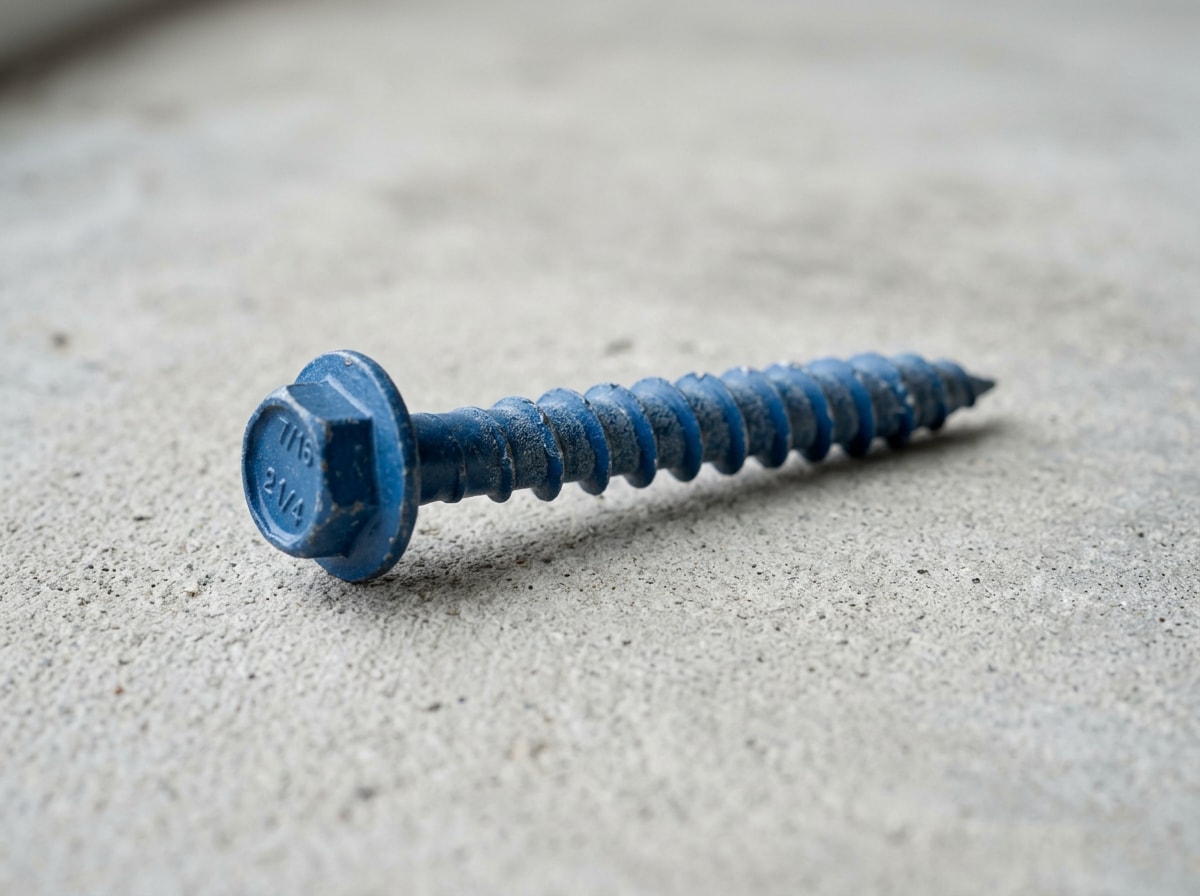
Concrete screws are hardened, self-tapping fasteners that cut their own threads into masonry using a hi-lo thread pattern.
The tall, sharp thread bites into the base material. The shorter thread between it stabilizes the screw and helps clear dust. Driven into a pre-drilled pilot hole, they hold without any expansion sleeve.
That geometry is the whole trick. Because the screw taps instead of expanding, it puts far less bursting pressure on the surrounding masonry, so you can land one closer to a slab edge or a block corner than a wedge anchor will forgive.
Against plastic anchors there is no contest. Plastic relies on friction from a soft sleeve that creeps under load and shrinks in heat. Steel engages the base material directly and resists pull-out far better.
One naming note that trips people up at the counter: Tapcon is a brand of concrete screw, not the category. Several manufacturers make code-listed equivalents, and the blue screws in the bin may or may not be that brand.
Sizing Chart: Diameter, Bit Pairing and Embedment Depth
Three numbers decide whether the connection holds: screw diameter, bit diameter, and how deep the threads actually sit in masonry.
The sizing math is simple. Add the thickness of whatever you are fastening to at least 1 inch of embedment. Do not exceed roughly 1-3/4 inches of embedment. Below an inch, holding value drops off fast. Past 1-3/4 inches, the screw is more likely to seize or shear on the way in.
Common diameters are 3/16 inch and 1/4 inch. Step up to 1/4 inch when the load is structural, when the bracket has oversized holes, or when you want more pull-out strength from fewer fasteners.
| Diameter | Base material | Usable embedment | Matching carbide bit |
|---|---|---|---|
| 3/16" | Poured concrete | 1" to 1-3/4" | 5/32" |
| 3/16" | Hollow CMU face shell | about 1" to 1-1/4" | 5/32" |
| 3/16" | Solid brick (unit face) | 1" to 1-1/2" | 5/32" |
| 1/4" | Poured concrete | 1" to 1-3/4" | 3/16" |
| 1/4" | Hollow CMU face shell | about 1" to 1-1/4" | 3/16" |
| 1/4" | Solid brick (unit face) | 1" to 1-1/2" | 3/16" |
Treat those as typical starting points and confirm them against the published data for the exact screw you buy.
The Stucco Mistake Nobody Warns You About
Here is the detail that costs Navarre homeowners the most fasteners: stucco is not base material.
Almost every block wall around Navarre wears a stucco coat, commonly 1/2 inch applied directly to block or about 3/4 inch over lath on frame. That thickness sits between the screw head and the concrete, and it contributes nothing to holding value.
So a 1-1/4 inch screw through 3/4 inch stucco leaves you half an inch in the block. That connection is already failed, it just has not fallen off yet.
Measure the stucco, treat it as fastened material, then add your 1 inch minimum of embedment on top. When we drill a test hole on a shutter job, the depth mark on the bit tells us exactly how much finish we are punching through before the block starts.
When the Building Department Is Involved
For anything inspected, work from the code report for the specific screw rather than a catalog page. The ICC-ES evaluation report for Tapcon+ screw anchors is a good example of what that documentation covers: allowable loads by base material, minimum embedment, edge distance and spacing.
Hex heads are measured from under the head. Flat countersunk heads are measured overall. Mixing those two conventions is a quiet way to end up an inch short.
Base Material Changes Everything
The same screw performs three different ways depending on what it goes into, and that is the point most installation guides breeze past.
Poured concrete gives the highest holding value. The material is dense and continuous, so threads engage along the full embedment. Driveways, slabs, footers and poured stem walls all fall here, including anything tied into a concrete foundation or footer.
Hollow CMU is a different animal. Thread engagement is limited to the thin face shell. Once the bit breaks through into the cell, the screw has nothing left to bite and spins free. Aim for a solid web where you can, or step up to a screen tube or toggle if the load is real.
Brick is brittle. Drill the face of the unit, not the mortar joint. Joints drill easily, which is exactly why they are a poor thread target.
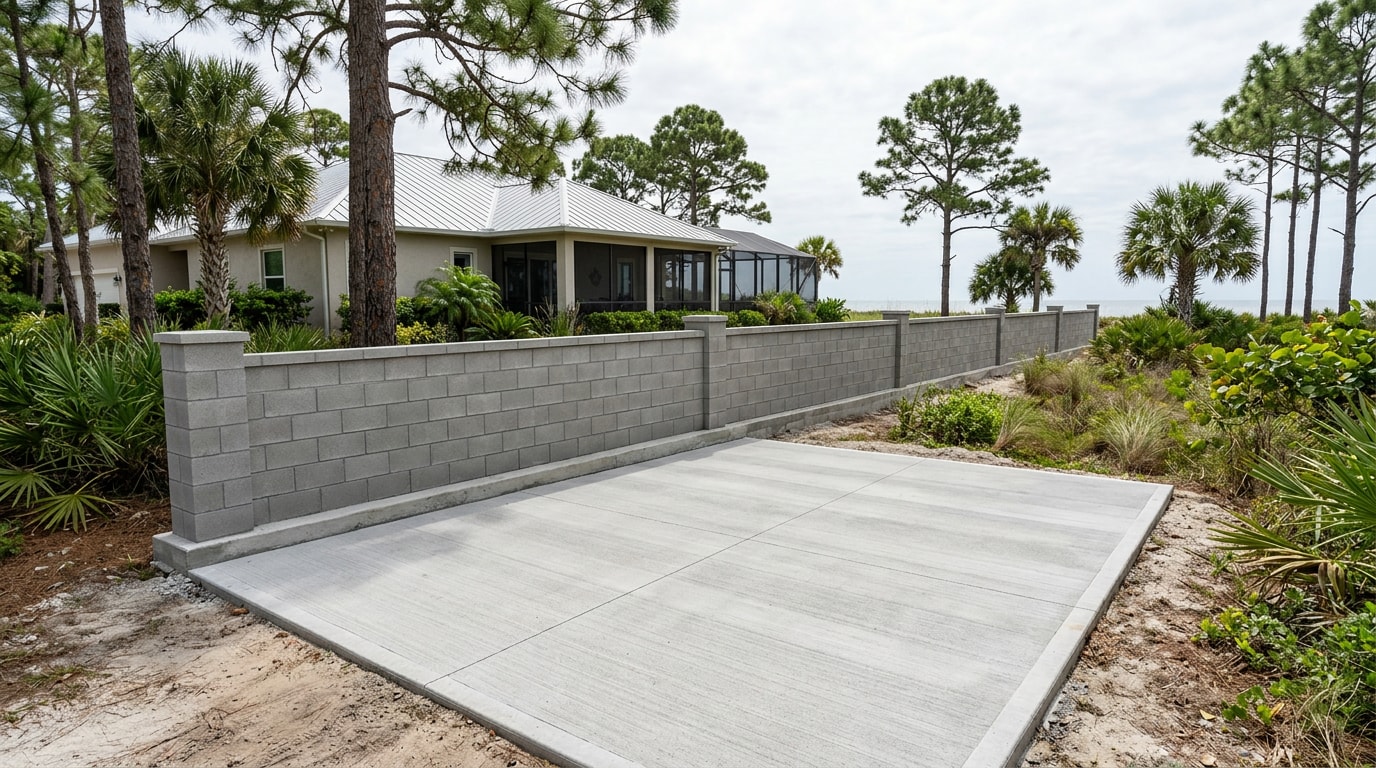
Around Navarre the typical house is concrete block with stucco, sitting on a poured stem wall, with a poured patio or pool deck out back. One project often spans two base materials, and the fastener plan should change with them. Our brick and block masonry crew sees both on the same wall most weeks.
How to Install Concrete Screws, Step by Step
Most concrete screw failures trace back to installation, not the fastener.
1. Drill the Pilot Hole
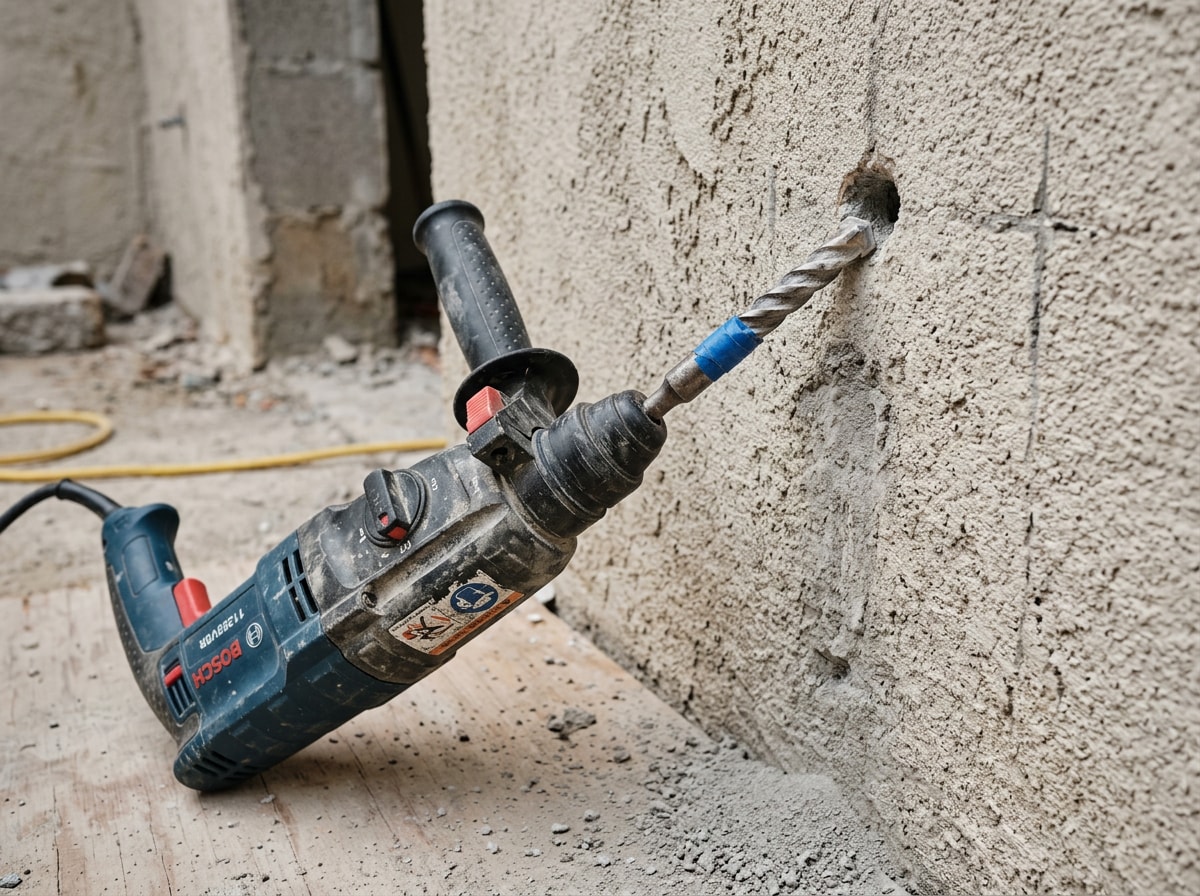
- Use a hammer drill set to hammer plus rotation, with a carbide-tipped bit. Straight rotation grinds rather than chips, which deforms the hole walls and costs holding strength before the screw goes in.
- Match the bit to the screw: 5/32 inch for a 3/16 inch screw, 3/16 inch for a 1/4 inch screw.
- Bits meeting the ANSI B212.15 carbide tolerance hold hole diameter tight enough for proper thread engagement. Many screw packs ship with the correct bit.
- Drill about 1/2 inch deeper than the screw will penetrate. That extra space becomes a dust pocket.
Wear eye protection and control the dust. Drilling concrete releases respirable crystalline silica, and OSHA's silica standard for construction sets out the water or vacuum dust-capture methods required on job sites.
2. Clean the Hole
This is the step almost everyone skips.
Pull the dust out with a shop vacuum, a wire brush, a blow-out bulb, or short bursts of compressed air. Then recheck depth with the bit.
Leftover powder compacts at the bottom of the hole as the screw advances. That packed plug stops the screw from seating, spikes driving torque, and ends in a seized or snapped fastener.
3. Drive the Screw
A drill-driver on a moderate clutch setting works well. An impact driver is faster and far less forgiving.
Keep the tool square to the surface and let the threads pull the screw in at a steady pace. Seat hex heads snug, flat heads flush or just below. Stop there.
Over-torquing strips the threads the screw just cut, and once that happens the hole is finished. If a screw spins free, move over and drill a fresh hole. Do not re-drive it in the same one.
Coatings for Navarre Salt Air
Exterior work changes the coating math completely.
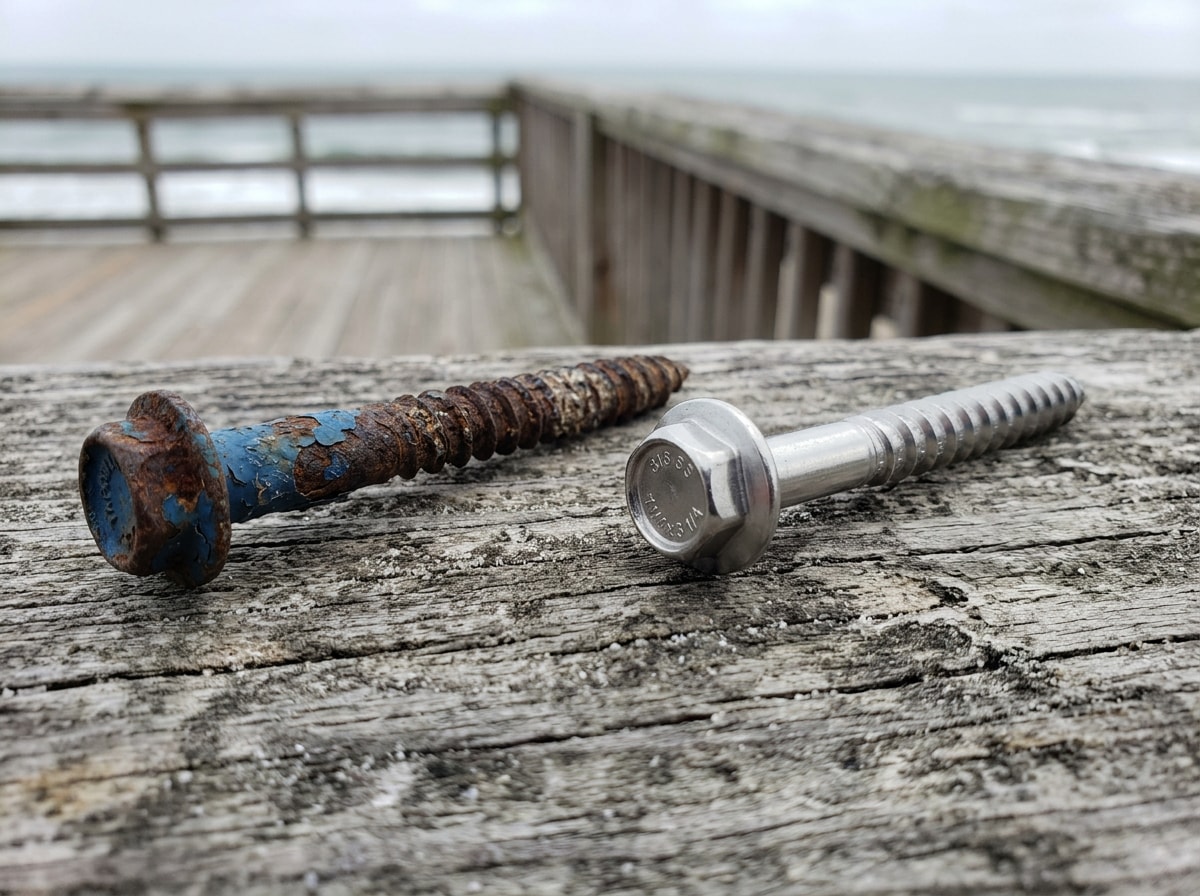
Standard blue coating over carbon steel is a ceramic-type barrier built to survive cement's alkalinity. Scratch it during driving, add moisture, and corrosion starts at the damage. Pressure-treated lumber accelerates it, since modern copper-based preservatives are aggressive toward unprotected carbon steel.
Salt air raises the stakes again. Airborne chlorides drive pitting on coated carbon steel and on lower grades of stainless, which is why the same screw behaves differently depending on where in Navarre it lands.
| Exposure zone | Typical example | Minimum spec |
|---|---|---|
| Interior slab, enclosed garage | Furring strips, shelf brackets | Blue-coated carbon steel |
| Inland Navarre, north of US 98 | Fence brackets, mailbox posts, ledger plates | 410 stainless |
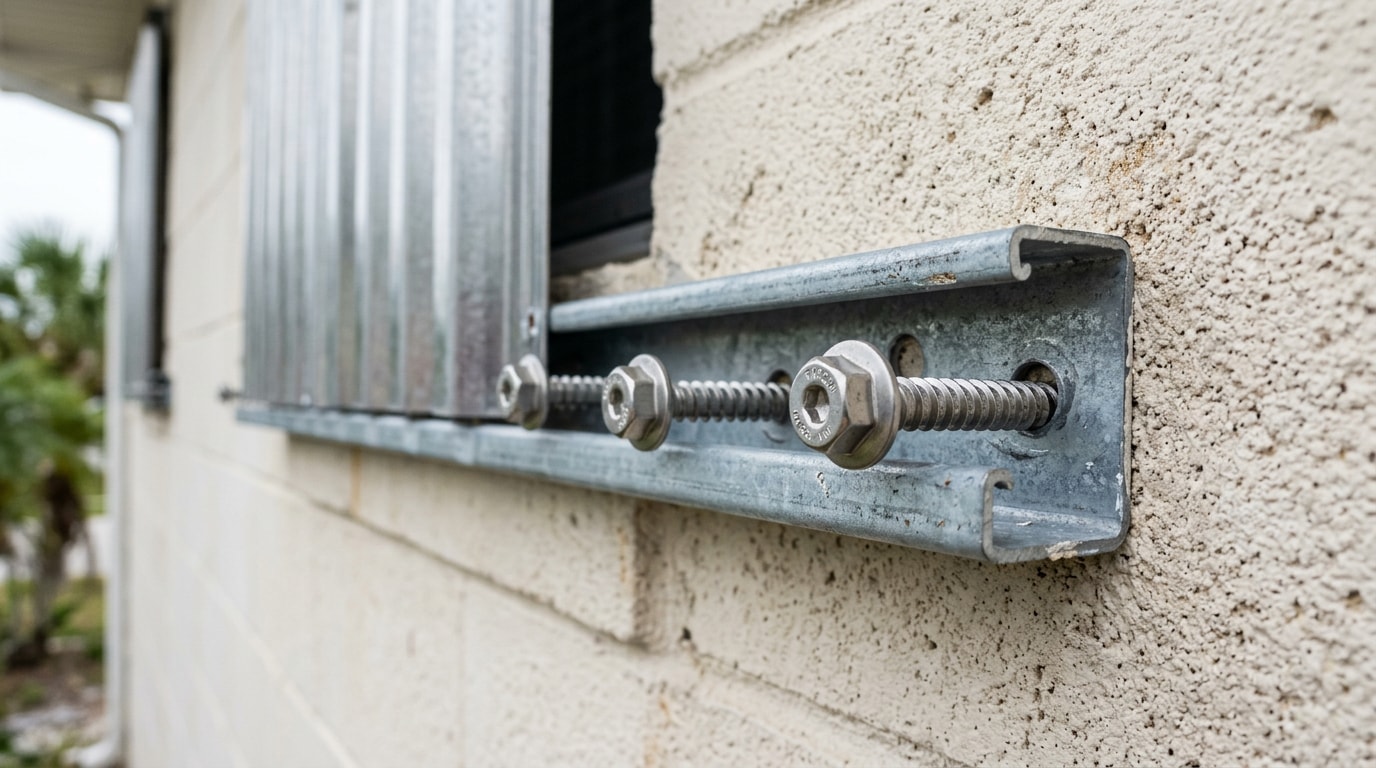
| Sound side and canal lots | Shutter track, screen enclosure, gate hardware | 316 stainless |
| Navarre Beach and Gulf-front | Rail posts, dock-adjacent hardware, anything in spray | 316 stainless only |
Two things to plan around before you buy:
- Stainless in direct contact with aluminum will corrode the aluminum in salt air. Isolate with a compatible washer or coating on screen frames, shutter clips and railing bases.
- 410 stainless is hard enough to tap its own threads but is not the corrosion equal of 316. On Gulf-front work, pay for 316.
For hurricane shutters and other opening protection, the assembly and its fasteners are approved together. You can verify a specific product through the state's Florida Building Code product approval search before the inspector does.
Budget the upgrade at bid time. A handful of extra dollars in fasteners costs far less than pulling and re-anchoring a shutter track. If you are pricing exterior work now, get a free estimate and we will spec the fastener schedule with the rest of the job.
When a Concrete Screw Is the Wrong Choice
Concrete screws cover a huge amount of light and medium-duty work, but they are not universal.
- Overhead structural loads. Use a code-listed anchor designed and documented for that condition, not a general-purpose screw.
- Hollow block with a real load. Face shell engagement alone will not carry a heavy bracket. Move to a screen tube, toggle or through-bolt.
- Cracked concrete near a joint or edge. Check the evaluation report for edge distance and spacing minimums first.
- Fresh concrete. Give a new slab time to cure before anchoring into it. On our patio and driveway pours, anchoring is scheduled after cure, not the week of the pour.
Retaining structures are their own category. Anchoring caps, rails or fixtures into a wall is a different problem from building one, and we handle that under retaining wall construction.
FAQ
What size drill bit do I need for concrete screws?
Use a 5/32 inch carbide bit for a 3/16 inch screw and a 3/16 inch bit for a 1/4 inch screw. Larger diameters have their own pairings. The packaging is the final word, so confirm before drilling.
How deep should a concrete screw go into concrete?
At least 1 inch of embedment in the masonry itself, and no more than about 1-3/4 inches. Drill the hole roughly 1/2 inch deeper than that to leave room for dust. Stucco, siding or furring thickness does not count toward embedment.
Do you need a hammer drill for concrete screws?
For poured concrete and dense block, yes. A hammer drill or rotary hammer chips the material instead of grinding it. A standard drill may get through soft brick or mortar, but expect a malformed hole, a dull bit and reduced holding value.
How much weight will a masonry screw hold?
It depends on diameter, embedment, base material and concrete strength, so use the manufacturer's published values for the screw you bought. Those tables usually list ultimate values, and a common design practice is to apply a 4:1 safety factor to get a working load. For inspected or structural work, use the allowable loads in the code evaluation report.
Can you use masonry screws in mortar joints or hollow block?
You can, but you should not for anything carrying weight. Mortar is softer and inconsistent, and hollow block gives you only the face shell. Target the solid face of the unit or a web, and switch to a toggle or screen tube anchor when the load is real.
Do concrete screws rust in coastal air?
Blue-coated carbon steel will, once the coating is scratched or the fastener stays wet. 410 stainless holds up better, and 316 stainless is the practical choice within sight of the water in Navarre.
Can you reuse concrete screws?
Some manufacturers permit a single re-drive into the same hole, but the lead thread dulls on the first installation and cuts less cleanly the second time. For anything load-bearing, use a fresh screw in a fresh hole.
Can you use masonry screws in wood or drywall?
No. They are engineered to tap hard base material, so in wood the aggressive thread tears fibers and in drywall it has nothing to grip. Use wood screws for framing and toggle or hollow-wall anchors for drywall.
Working in Navarre
We pour, build and anchor in Santa Rosa County every week, and the fastener schedule is part of the estimate, not an afterthought at the supply house. You can see finished work on our project gallery, review what we cover on the Navarre, FL service area page, or browse full masonry contractor services.
Have a wall, deck or shutter job you want specified correctly the first time? Start at the Gulf Breeze Concrete Services homepage or request a free estimate and tell us where the property sits relative to the water. That one detail changes the fastener call more than anything else on the list.
Written by the masonry and concrete crew at Gulf Breeze Concrete Services, a licensed and insured contractor serving Navarre, Gulf Breeze, Pensacola and Milton, Florida. Questions about a specific fastener or substrate can be sent through our contact page.