Renting concrete mixers & masonry equipment in Pensacola Beach, FL costs less per day than most homeowners expect and more per project than almost anyone budgets once blades, tow kits and damage waivers hit the ticket. Below are the mixer classes that actually fit island work, 2026 benchmark rate ranges, and the two minutes of math that tell you whether to run the machine yourself or hand the pour to a crew.
Concrete Mixer Classes: Which Size Fits Your Pour
A rented mixer earns its keep when the pour is too small for a ready-mix truck or the site is too tight for one to reach. On the barrier island, the second reason wins more often than the first. Narrow lots, soft shoulders and limited staging space keep our crews hauling a towable mixer instead of scheduling a truck for small repairs.
Portable Electric Mixers (3 to 5 cu. ft.)
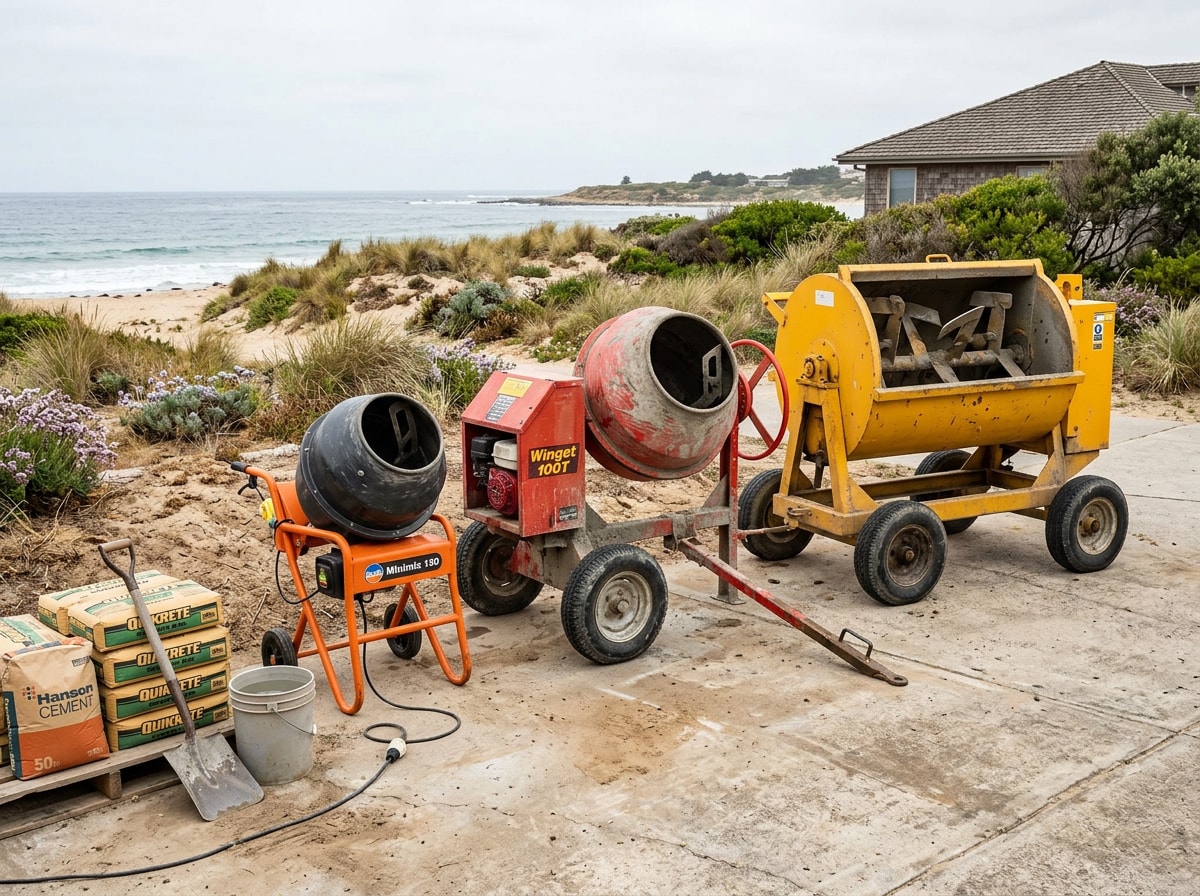
A portable electric mixer sits on a wheelbarrow-style frame and handles roughly two 80 lb bags per batch.
It fits in a pickup bed or an SUV, which makes it the default weekend pick for:
- Fence post and mailbox footings
- Walkway and step patches
- Dock post setting
- Small equipment pads
One honest limit: it needs a nearby outlet or a generator. On a vacant beach lot with no power drop, that is a second rental line item.
Towable Gas Mixers (6 to 12 cu. ft.)
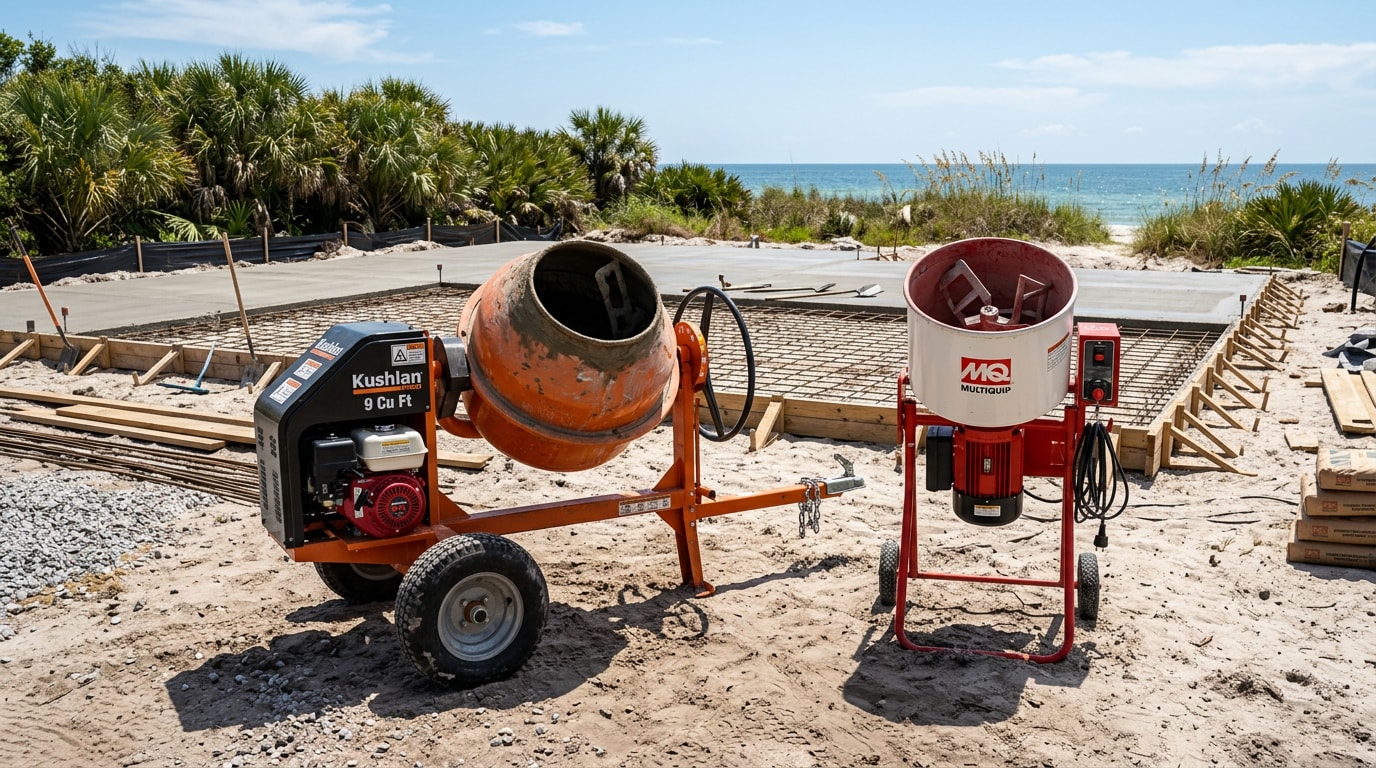
The 6 to 12 cu. ft. class is towable, and a 9 cu. ft. drum is the common workhorse. A gas engine keeps producing where there is no power at all.
Before you hitch one, confirm three things:
- Ball size and coupler match
- Lighting adapter fits your truck
- Whether the tow kit is billed as a separate line
Capacity means nothing if you cannot legally move the machine over the Bob Sikes Bridge.
Mortar Mixers (Paddle, 7 to 12 cu. ft.)
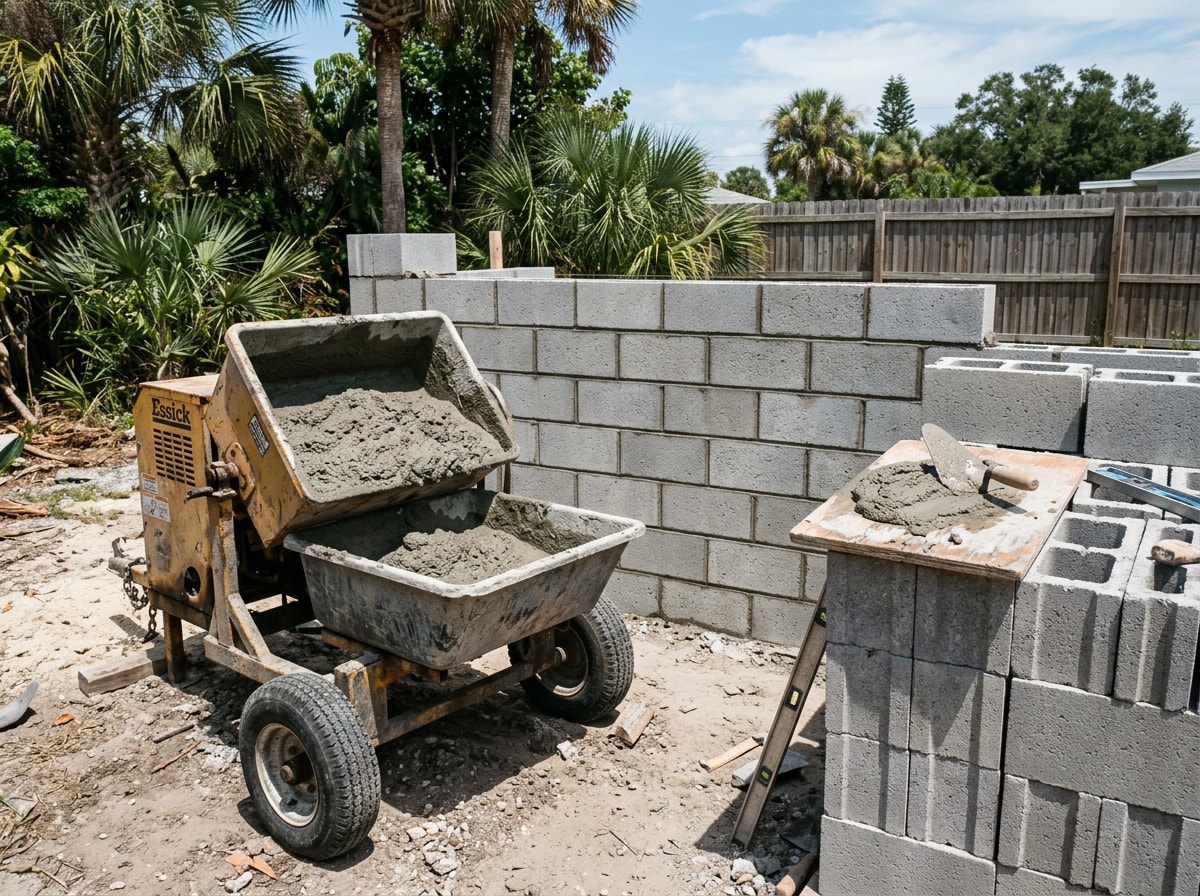
Mortar needs a paddle mixer, not a tumbling drum. Paddles shear the mix against the tub instead of dropping it, which is how mortar reaches uniform consistency and workable board life.
Masonry specification practice calls for mixing 3 to 5 minutes after every ingredient is in the tub. Short-mixed mortar looks fine on the trowel and underperforms in the joint.
Paddle mixers cover block and brick work, CMU walls, stucco and stone setting. If you are still deciding which material your project even calls for, our guide on whether masonry and concrete are the same thing sorts that out first.
The Batch Math Nobody Runs Before Renting
Here is the number that changes minds. An 80 lb bag of concrete mix yields about 0.6 cu. ft., so a cubic yard takes roughly 45 bags.
Run a small patio through that:
- A 10 ft by 12 ft slab at 4 in. thick is about 40 cu. ft., or 1.5 cubic yards
- That is roughly 67 bags of 80 lb mix
- A 3.5 cu. ft. portable mixer takes two bags per batch, so about 34 batches
- At 6 to 8 minutes per batch including loading and discharge, plan on 4 hours of mixing alone, before finishing
Cost runs the same direction. Bagged mix at $5 to $7 a bag puts a cubic yard near $225 to $315 in material, while ready-mix delivered on the Gulf Coast is commonly quoted well below that per yard before short-load fees. Treat both as estimate ranges and confirm current pricing when you buy.
The practical line our crews use: under about a half yard, mix it. Over a yard, the rental is costing you money and a Saturday.
2026 Rental Rate Ranges
Weekly is never 7 times daily. A week typically lands near 3 to 4 day rates, and a month near 3 weeks. The figures below are 2026 benchmark estimate ranges, not quotes.
| Class | Day | Week | Month |
|---|---|---|---|
| Portable electric mixer (3 to 5 cu. ft.) | $45 to $65 | $150 to $210 | $400 to $550 |
| 6 cu. ft. towable mixer | $70 to $95 | $230 to $300 | $600 to $800 |
| 9 to 12 cu. ft. towable mixer | $95 to $150 | $320 to $480 | $850 to $1,300 |
| Mortar mixer (7 to 12 cu. ft.) | $85 to $140 | $300 to $450 | $800 to $1,200 |
| Hand-held cut-off saw | $50 to $80 | $170 to $260 | $450 to $700 |
| Walk-behind concrete saw | $95 to $175 | $340 to $600 | $900 to $1,600 |
| Plate compactor | $55 to $85 | $190 to $280 | $500 to $750 |
| Power trowel (36 in.) | $75 to $120 | $260 to $400 | $700 to $1,050 |
Budget for the adders that rarely appear in the advertised rate:
- Delivery and pickup, often billed each way
- Fuel return policy
- Damage waiver or rental protection, frequently 10 to 15 percent
- Environmental or admin percentage
- Diamond blades, almost never included
- Tow kit charge
- Cleaning charge if a drum returns with set material
Two island realities to price in: towing a 12 cu. ft. mixer across the bridge needs a properly rated vehicle, and salt air means yards often want equipment rinsed before return.
Rent the Equipment or Hire the Crew?
| Factor | DIY with rented equipment | Hire a contractor |
|---|---|---|
| Best for | Repairs under about a half yard, post footings, patches | Slabs, driveways, structural walls, anything inspected |
| True cost | Rental plus bags, blades, fuel, waiver, your weekend | One line item, materials and labor included |
| Finish quality | Hand float and trowel, acceptable on utility pours | Screed, float, joint and cure on a controlled schedule |
| Timing risk | Gulf heat shortens the finishing window fast | Crew sized to close the slab before it sets up |
| Warranty | None | Workmanship coverage |
A permitted slab, a load-bearing block wall or anything tied to a foundation belongs with a licensed crew. See our concrete contractor services and masonry contractor services for the work that falls on the right side of that line.
Cutting, Drilling and Surface Prep Equipment
This group covers breaking, drilling and making clean cuts in cured concrete and block.
Saws
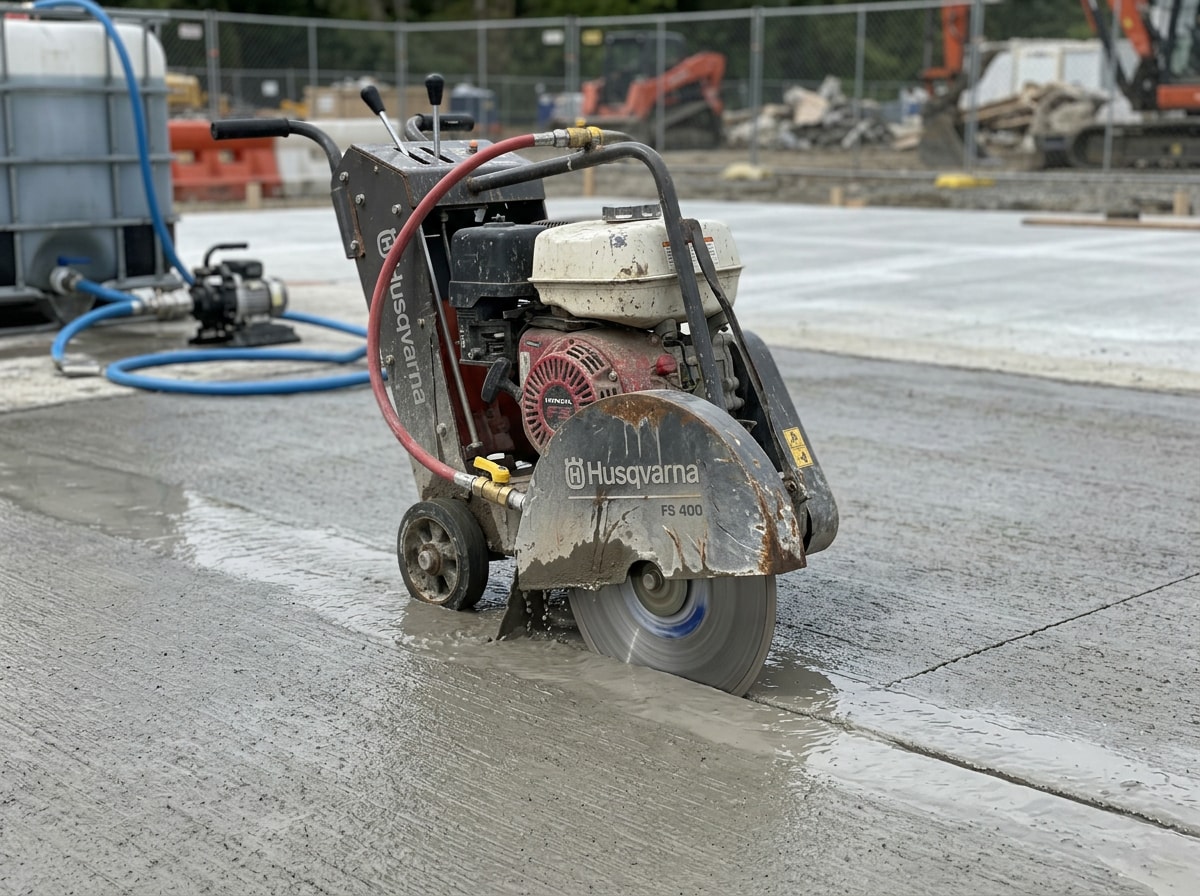
Hand-held cut-off saws typically run a two-cycle engine with blades up to 14 in. for concrete, block, pipe and asphalt. Walk-behind saws step up to engines near 11 hp with 18 in. blades, which is the machine for cutting control joints in a fresh slab.
Wet cut or use vacuum collection every time. The NIOSH safe work practices for silica cover the controls that keep respirable dust out of the breathing zone when cutting concrete, mortar and stone.
Core Drills and Hammer Drills
A rig-mounted core drill gives you precision on large-diameter holes, vertical or horizontal. Rotary hammers handle anchor holes up to about 1 1/4 in. Electric breakers sit one shelf over for demolition work.
For full slab or footing removal, that is a different scope entirely. Our concrete demolition crews bring the equipment and the haul-off.
Blades
Here is the cost trap the big chains bury: the diamond blade is usually not in the rental rate.
- A 14 in. blade for a hand-held saw will not fit a walk-behind
- Match the blade to the material, concrete and block versus asphalt versus tile
- Confirm the wet cutting rating before you hook up water
Grinders and Scarifiers
Grinders profile a lanai or garage floor before epoxy or a decorative overlay. A scarifier bites deeper to strip failed coatings and knock down trip hazards. Pair either with a dust extractor and match the machine to the coating profile in the finish spec.
Compaction, Screeds and Power Trowels
Sub-base prep decides whether the slab or paver field stays flat through a few Gulf Coast rainy seasons.
- A jumping jack rammer compacts footers, trenches and confined areas
- A plate compactor sets pavers and locks bedding sand
- Neither one fixes bad grading, which is why site preparation and grading comes first
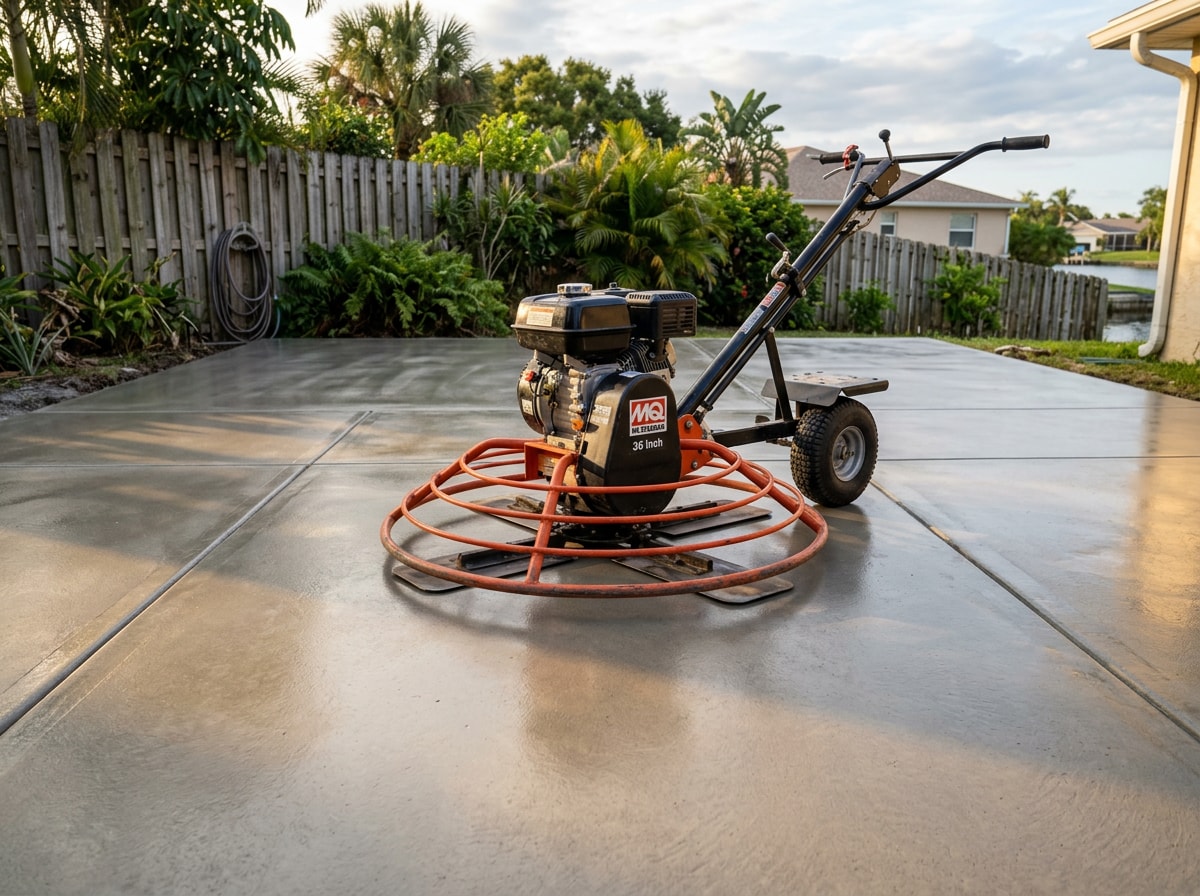
Finishing runs in a fixed order: consolidate, screed, float, trowel. A concrete vibrator drives out voids, a magnesium bull float opens the surface, and a power trowel closes it.
Book finishing tools by the day. Your window is set by cure time, and island heat shortens it fast.
What Pensacola Beach Changes About the Job
Barrier island conditions move more than the rental logistics.
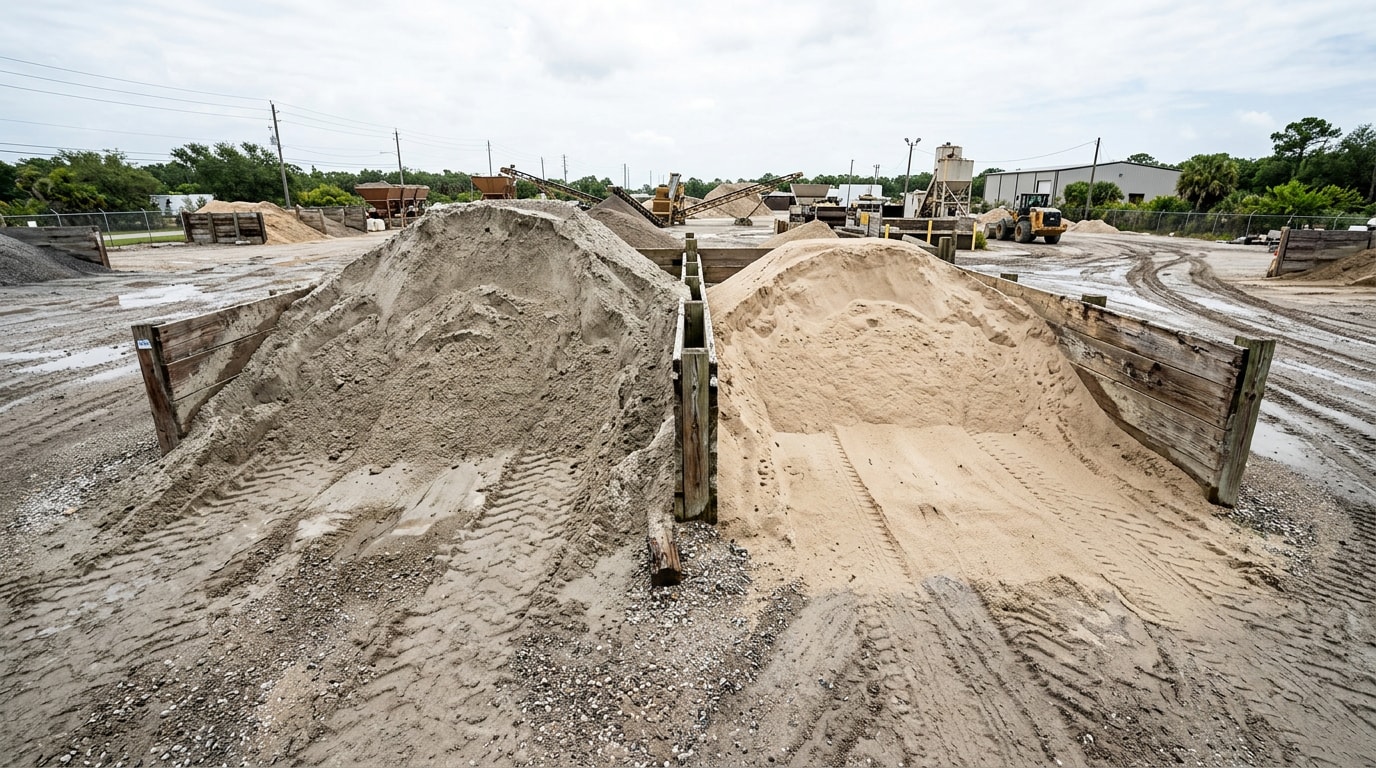
- Beach sand is not concrete sand. Fine, rounded dune sand does not meet the gradation masonry mortar and concrete need. Haul in graded sand.
- Salt air attacks reinforcement. Cover over rebar matters more here than three miles inland, and so does mixing water quality.
- Wind load is real. Fences, columns and freestanding walls on the island are designed for coastal wind pressures, which drives footing size and reinforcement.
- Flood zone rules apply. Slab elevation and enclosure rules can change what you are allowed to build and how.
- Access is the hidden cost. Limited staging, shared drives and shoulder parking decide whether a truck can reach the pour at all.
Safety and Permits Before the First Batch
Walk the pre-use inspection before anything runs: drum and paddle guarding, tire and hitch condition, working kill switch. Lock out power before clearing a jam. Never reach into a running mixer.
Wet concrete is strongly alkaline, so plan PPE for skin contact along with eye and hearing protection. On a worksite, operator training and hazard communication are the employer's obligation, not the rental yard's. OSHA's concrete and masonry construction standard, 29 CFR 1926 Subpart Q, sets those requirements.
Permits come before the pour, not after. Pensacola Beach falls under Escambia County, where slab and foundation work is inspected at specific stages, and slab inspections happen after reinforcement is in place but before concrete is placed. Check current requirements through [Escambia County Building Services permitting]https://myescambia.com/our-services/building-services/permitting before you schedule anything.
When to Hand It to a Crew
Some work is worth a rental day. Some work is worth a contractor.
We handle the second category across the island and the mainland, including:
- Concrete driveway installation
- Concrete patio installation
- Concrete pool deck installation
- Decorative and stamped concrete
- Brick and block masonry
- Retaining wall construction
- Outdoor kitchen construction
- Paver patio installation
Browse recent work on our projects page, or see coverage details for Pensacola Beach, Gulf Breeze, Pensacola and Navarre.
Not sure which side of the line your project falls on? Send dimensions and a photo and we will tell you straight. Get a free estimate from Gulf Breeze Concrete Services.
FAQ
How much does it cost to rent a concrete mixer for a day?
Plan on roughly $45 to $65 per day for a 3 to 5 cu. ft. electric mixer and $70 to $150 for a towable gas unit. Size, engine type and rental length move the rate most. Delivery, fuel and damage waiver are usually separate.
What size concrete mixer do I need?
Match capacity to bags per batch. A 3.5 cu. ft. mixer takes about two 80 lb bags, a 6 cu. ft. takes about four, and a 9 cu. ft. takes about six. If you need more than roughly 20 batches, look at ready-mix instead.
What is the difference between a cement mixer and a mortar mixer?
A drum mixer tumbles concrete, aggregate included. A mortar mixer uses rotating paddles in a stationary tub to shear sand and cement into a uniform mortar. Mortar mixed in a drum tends to ball up and stays inconsistent.
Is it cheaper to mix your own concrete or order ready-mix?
For small pours, bags win because there is no delivery or short-load fee. Past about one cubic yard, bagged mix usually costs more per yard than delivered ready-mix, plus hours of labor. Confirm current bag and delivery pricing locally before you decide.
Do you need a license to operate a concrete mixer?
No operator license is required for a standard drum or mortar mixer. On a commercial jobsite, employer training and hazard communication requirements still apply under OSHA rules.
Is delivery available for mixer rentals, or do I pick it up?
Both are common. Small electric mixers fit in a truck or SUV, while towables need a rated hitch and proper towing capacity. Delivery and pickup are usually billed each way by distance, and beach-side unloading access is tight, so confirm the drop location when you book.
Do I need a permit for a concrete slab or masonry wall on Pensacola Beach?
Usually yes for slabs, foundations and structural walls. Escambia County inspects foundation and slab work at set stages, and flood zone rules can add requirements on the island. Check with the county before ordering material.
Is it better to buy or rent a concrete mixer?
Rent for a single project. Buying only makes sense if you will run the machine regularly across the year, and even then a stored mixer in salt air needs maintenance you may not want to own.