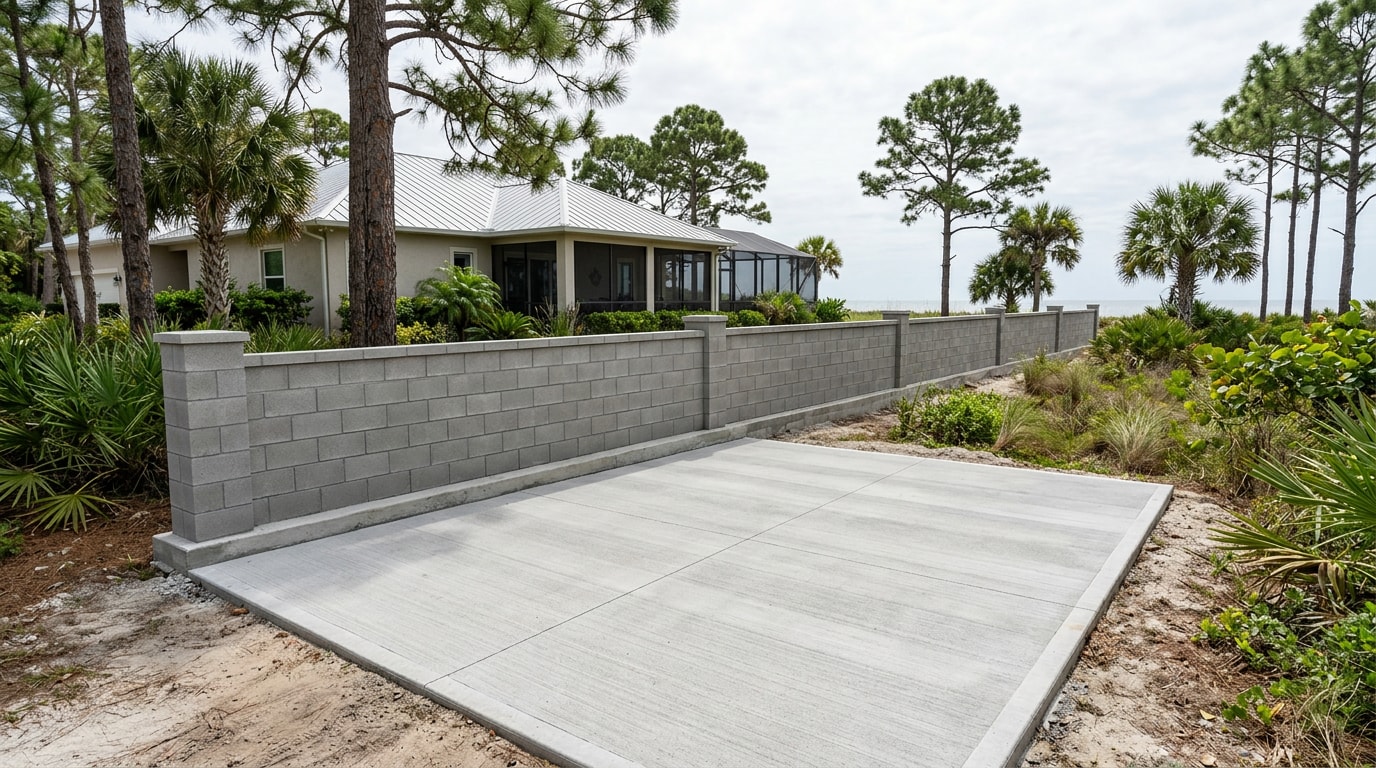
Is masonry the same as concrete? No. Concrete is a material you mix and pour, masonry is the craft of stacking units and bonding them with mortar, and the concrete block sits right in the middle of both definitions. Here is how to tell which one you are looking at in your own yard, and which trade to call.
The Short Answer
Concrete is a building material. Cement, water, and aggregate get mixed, poured into a form, and cured.
Masonry is a construction method. Individual units get laid one at a time and bonded with mortar.
Concrete can be one of the materials used in masonry. That is exactly where the confusion starts, and the concrete block is the reason.
A concrete block wall is made of concrete and installed as masonry. Both descriptions are correct at the same time.
| Poured Concrete | Masonry | |
|---|---|---|
| What it is | A material | A method |
| Installed as | One continuous pour | Unit by unit, with mortar |
| Best at | Large flat surfaces | Walls, columns, features |
| Typical Gulf Breeze use | Driveways, slabs, pool decks, footings | Block walls, veneer, outdoor kitchens, fire pits |
| Main repair | Crack and joint repair | Repointing mortar joints |
| Labor demand | Lower per square foot | Higher, skilled trade |
Our crews run both sides of that line through the concrete contractor services and masonry contractor services pages.
Which Trade Do You Call?
This is the practical question behind the search. Match the project to the trade.
- Driveway, slab, sidewalk, pool deck, footing: concrete contractor. Start with concrete driveway installation or concrete pool deck installation.
- Block wall, privacy wall, brick columns: masonry contractor. See brick and block masonry.
- Retaining wall along a slope or waterfront lot: masonry, built on a poured footing. See retaining wall construction.
- Outdoor kitchen, fire pit, veneer feature: masonry. See outdoor kitchen construction.
- Both on one job: most Gulf Breeze backyards. Pour the deck, then build the wall.
Not sure which bucket your project falls into? Get a free estimate and we will tell you which scope it actually is before you price it out.
What Is Concrete?
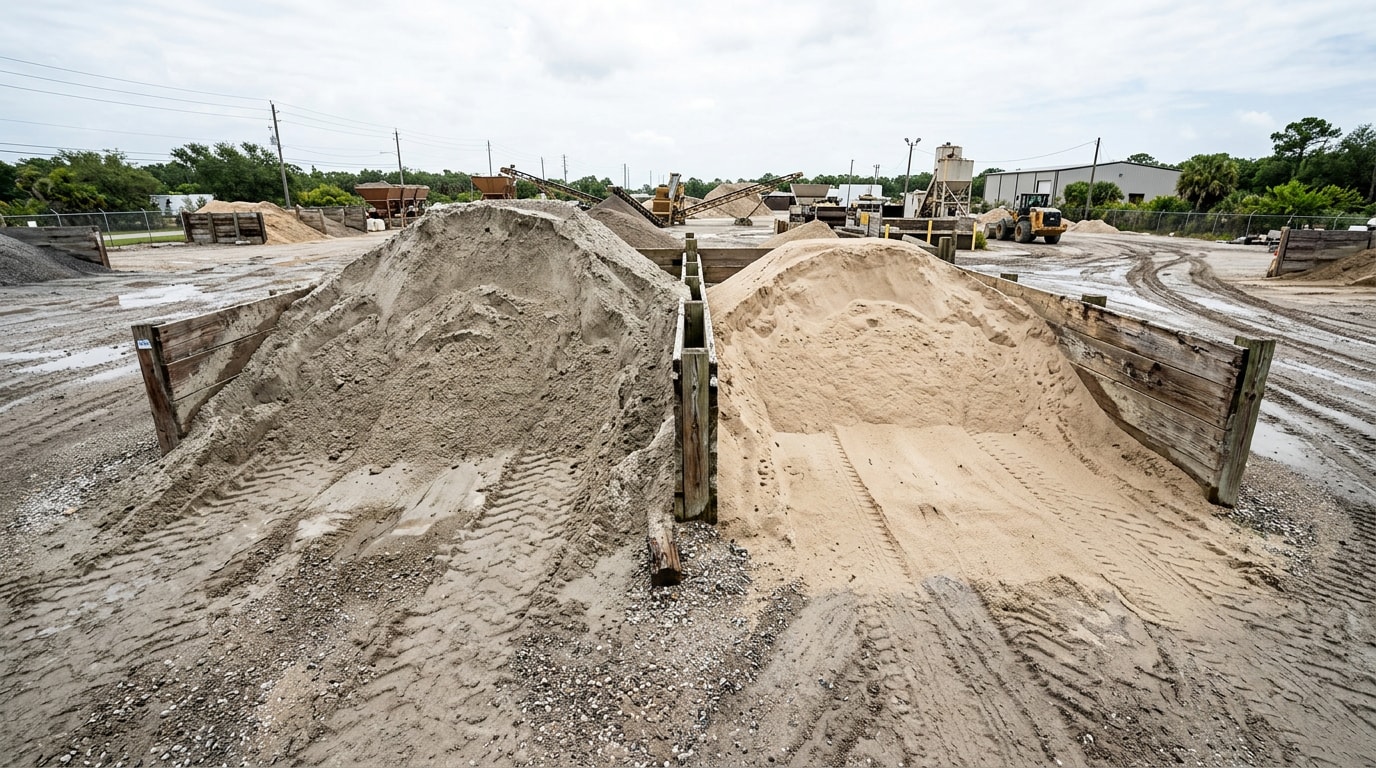
Concrete is a mixture of cement, water, and aggregate, meaning sand plus gravel or crushed stone. Portland cement is the basic ingredient, and concrete forms when that cement creates a paste with water that binds sand and rock together as it hardens , a process you can see explained in the American Cement Association's overview of how cement is made.
That hardening is called curing, and strength keeps building for weeks after the surface looks finished.
Concrete arrives as a liquid, so it takes the shape of whatever form holds it.
On its own it handles compression beautifully but pulls apart under tension. That is why crews set rebar or welded wire mesh before the pour.
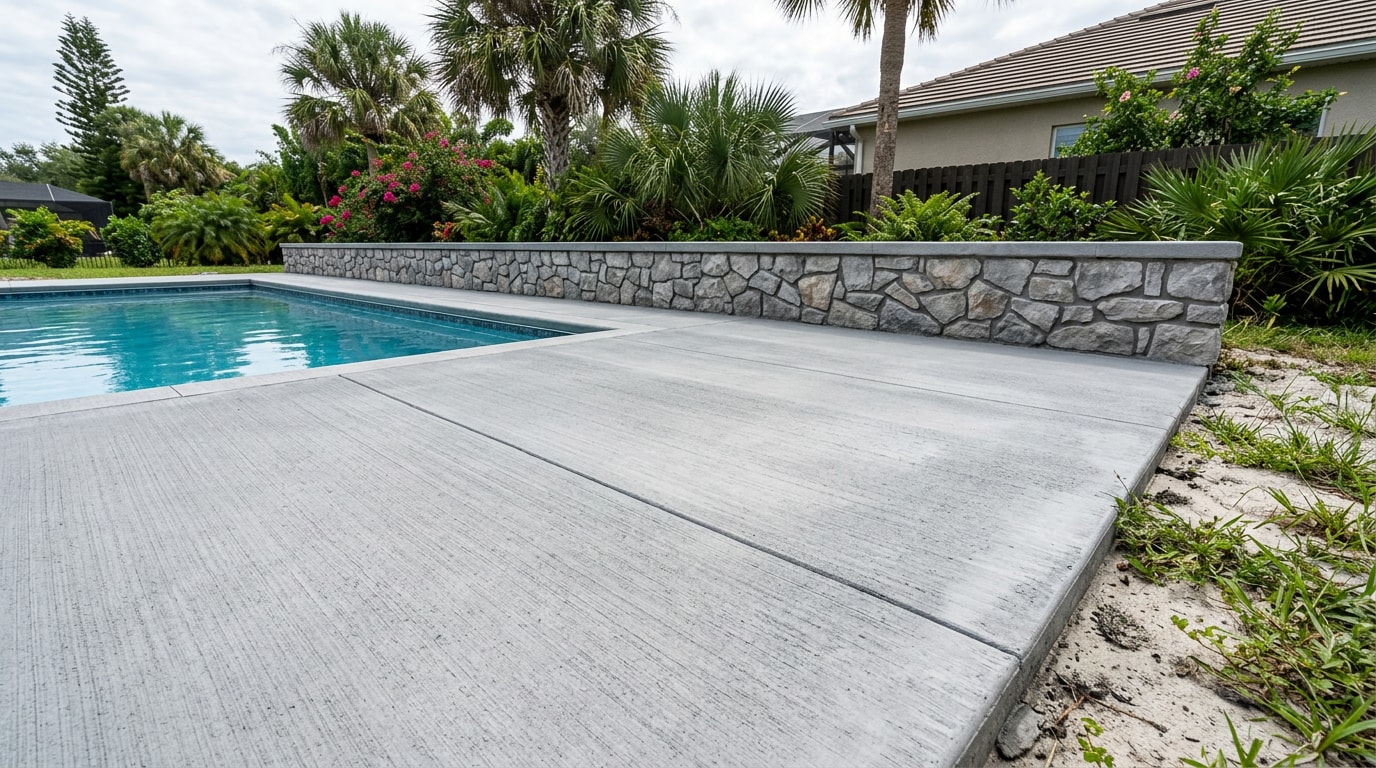
You will find poured concrete in footings, slabs, driveways, pool decks, patios, and sidewalks. Finish options range from broom texture to decorative and stamped concrete.
What Is Masonry?
Masonry is the practice of assembling individual units one at a time and bonding them with mortar. It is also the name of the trade that does the work.
Types of Masonry Units
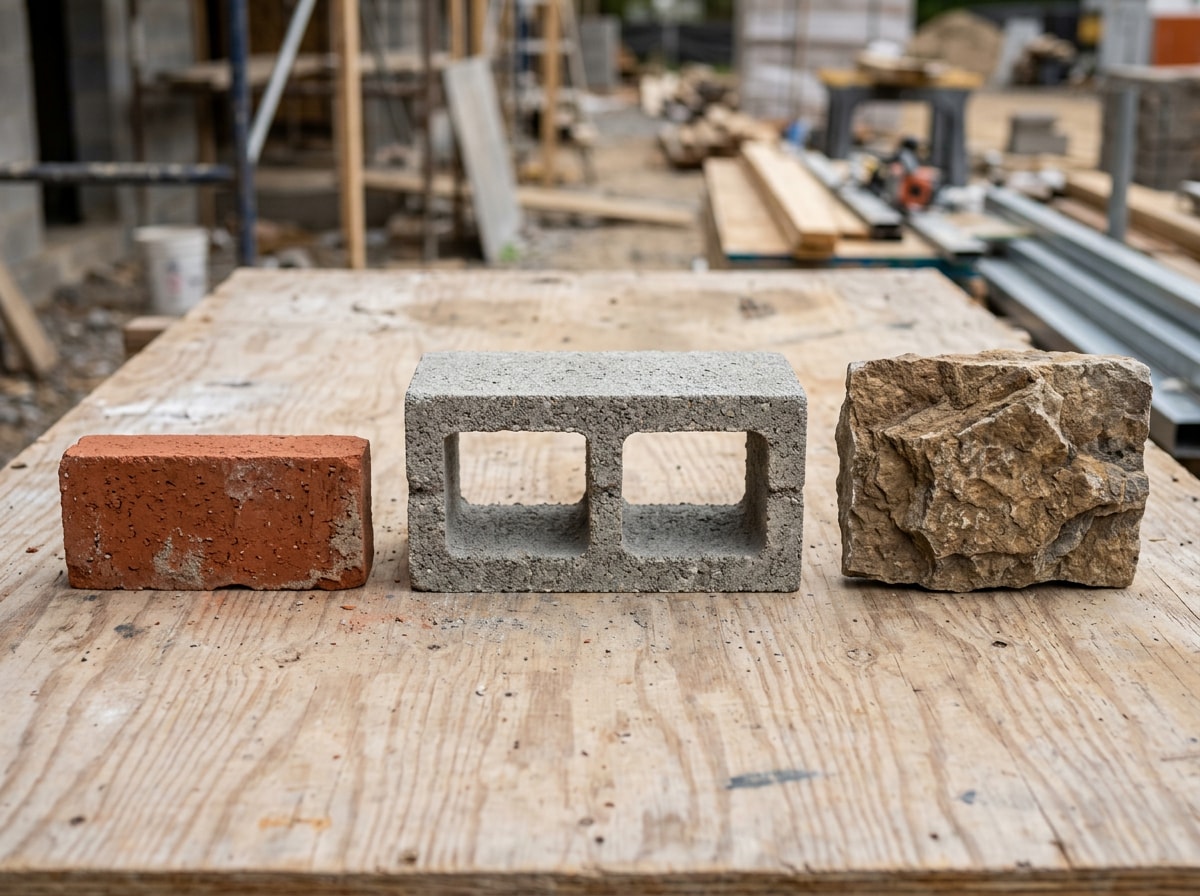
Masonry units come in three common families: fired clay brick, concrete block (CMU), and natural or manufactured stone. Each is laid in a bed of mortar, and each gets picked for a different reason.
- Brick: chimneys, columns, and facades where a uniform classic look matters.
- Concrete block: structural walls, foundations, and privacy walls. Fast, strong, economical.
- Stone: veneers, fire pits, and feature walls where texture carries the design. See stone masonry work.
Here is the hinge of the whole question: only one of those three is actually made of concrete.
Types of Masonry Construction
Solid masonry walls use two or more wythes of units bonded together and carry structural load themselves.
Cavity wall construction uses two wythes with an air gap between them, which helps manage moisture and can still function as a load-bearing wall.
Veneer masonry is a single decorative layer anchored to a structural backing of wood framing, block, or concrete. Veneer is non-structural. It looks like a solid brick or stone wall, but the wall behind it is doing the work. That distinction matters when you price decorative masonry features.
Where Concrete and Masonry Overlap: CMUs
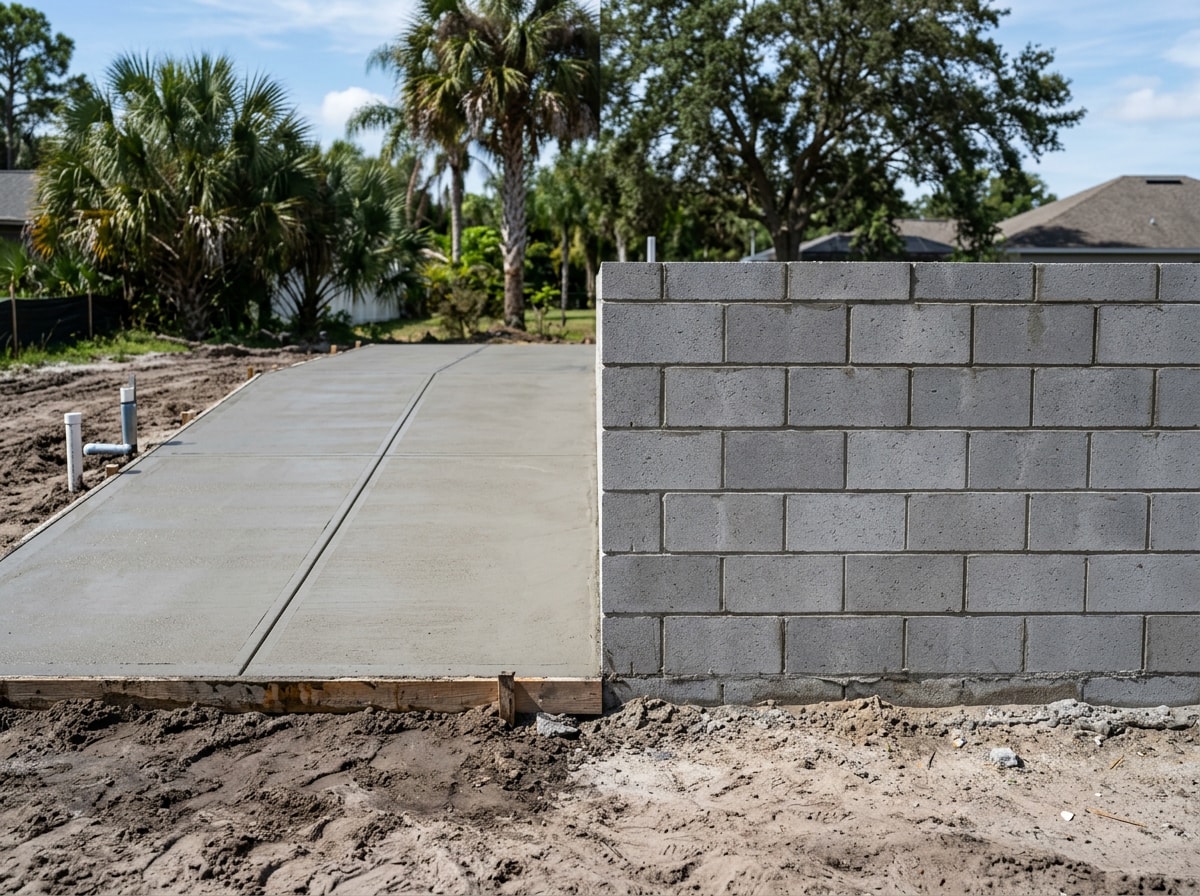
A concrete masonry unit is where the two terms collide. It is cast from concrete in a plant, cured, delivered as a unit, then laid by hand with mortar. Masonry work, using a concrete product.
ASTM C90 is the most commonly referenced specification for loadbearing units, and those units may be hollow or solid in cross section and reinforced as needed to resist design loads , per the Concrete Masonry and Hardscapes Association's unit specification resource.
Picture a typical block wall on the coast:
- A crew forms and pours a concrete footing. See concrete foundation and footer installation.
- Once it cures, masons lay the block wall on top of it, unit by unit.
- Vertical rebar runs up through the hollow cores.
- Those cells get filled with grout or concrete.
Poured concrete, mortar, and block, all in one assembly. If you want the sizing and code detail on the block itself, our guide to CMU sizes, code, and cost breaks it down.
Key Differences That Actually Affect Your Project
Construction Process
Masonry is hand work. A mason sets each unit into fresh mortar, checks level and plumb, strikes the joints, and repeats hundreds of times a day. It is slow, methodical, and demands skilled labor.
Concrete runs the opposite way. Crews build forms, set reinforcement, place the mix, then finish and cure.
A driveway that would take a week to lay in brick can be poured in a morning. That gap drives the cost structure below.
Strength
Both excel in compressive strength, meaning downward crushing loads. Neither handles tensile strength well on its own.
The fix differs. Reinforced concrete embeds rebar so steel takes the tension. Masonry gains tensile capacity through vertical rebar and grouted cells, but the mortar joints remain the weaker link.
That is why a home's footing and slab get poured while the wall above may be block. Real performance still depends on mix, reinforcement, mortar type, and workmanship.
Durability in a Coastal Climate
Freeze and thaw damage is the standard talking point in national articles. On the Santa Rosa Sound it barely matters.
Our real enemies are salt air, humidity, sandy soil, a high water table, and hurricane debris.
- Salt-laden air attacks rebar wherever concrete cover is thin, causing rust that spalls the surface.
- Sandy, saturated soils drive cracking through settlement.
- On block walls, moisture works the joints first, so repointing becomes the recurring task.
What we see in the field: on Gulf Breeze and Pensacola Beach jobs within about a mile of open water, the tear-outs we get called to are almost always joint and rebar problems, not crushed block. Mortar washes out at the bed joints and rusting steel pushes the face shell off. We have yet to demo a wall here that failed because the units themselves ran out of compressive strength.
That points to a practical rule: on the water, spend your money on cover, grout, drainage, and sealing, not on a higher block strength.
Wind matters too. Wind-borne debris regions cover areas within one mile of the coastal mean high water line where the ultimate design wind speed is 130 mph or greater, or anywhere the ultimate design wind speed reaches 140 mph or greater , which you can check against the Santa Rosa County wind speed maps. Those conditions favor grouted, reinforced assemblies over unreinforced stacked units.
Cost
Masonry costs more to install. It is labor-intensive and requires a trained trade.
Concrete is far more economical across large flat areas, where one pour covers ground that would take days to lay by hand.
Long term the math shifts. Well-built masonry needs little beyond periodic repointing, and that lower upkeep can offset the higher install price.
Any dollar figures you find online are national averages. Local labor, access, soil, and haul-off change the number. See finished examples on our projects page, then get a real quote.
Which Is Better for Hardscapes?
Use concrete for large, uniform surfaces. Use masonry for anything vertical or decorative.
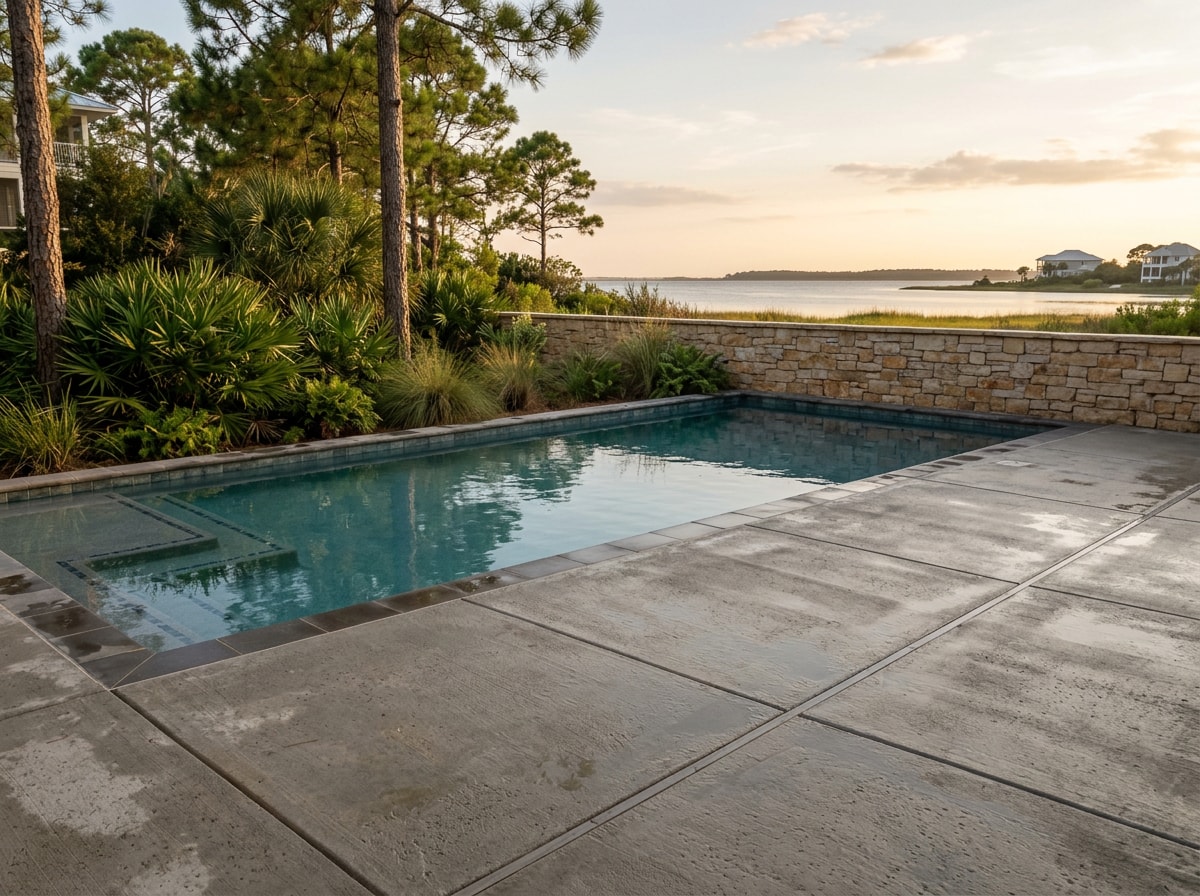
A driveway or pool deck wants a continuous poured surface with control joints. A retaining wall, seawall cap, outdoor kitchen, fire pit, or planter wants units, texture, and pattern.
There is a third option people forget: pavers. Segmental units set on a compacted base with no mortar, which flex with settlement instead of cracking. That is why paver pool deck installation is popular on sandy lots here.
Most Gulf Breeze projects use two of the three. Pour the pool deck, then run a block-and-stone privacy wall along the property line.
Check the Gulf Breeze service area to confirm coverage, or start from our homepage to see everything we self-perform.
FAQ
Is concrete stronger than masonry?
Generally yes, with conditions. Reinforced poured concrete outperforms mortared units overall because steel handles the tension. Masonry resists compression extremely well, and grouted, reinforced block closes much of the gap.
Is all masonry made of concrete?
No. Masonry units include fired clay brick, natural and manufactured stone, glass block, and structural clay tile. Concrete block is simply the most popular option in Florida because it is affordable, strong, and readily available.
Is poured concrete considered masonry?
Not on its own. A monolithic slab or footing has no individual units and no mortar joints, so it falls outside the definition of masonry. Cast that same concrete into blocks and lay them with mortar, and it becomes masonry.
Is cement the same as concrete?
No. Cement is the powdered binder. Concrete is the finished mixture of cement, water, and aggregate. Cement is an ingredient, not the product.
Is a concrete block wall masonry or concrete?
Both, honestly. The blocks are a concrete product. The wall is masonry construction because the units are laid and bonded with mortar.
Can masons pour concrete?
Usually yes. Many masonry contractors form and pour concrete as well, though some specialize strictly in decorative or unit work. Ask which services a contractor self-performs versus subcontracts before you sign.
What is the difference between a mason and a concrete contractor?
A mason lays units and works with mortar, level, and plumb. A concrete contractor builds forms, sets reinforcement, places the mix, and finishes flatwork. Different tools, different daily rhythm, and often different crews on the same job.
Do I need a permit for a block wall in Gulf Breeze, FL?
Often yes, depending on height, location, and whether it retains soil. Setbacks and wind design requirements also apply near the water. Confirm with the local building department before you order material.
Which lasts longer in salt air, concrete or block?
Both last decades when built right. The deciding factors are rebar cover, grouted cells, drainage behind walls, and sealing. Detailing beats material choice on the coast.
Can you demo old concrete and rebuild with masonry?
Yes. Removal and rebuild is a common sequence. See concrete demolition for how we handle tear-out and haul-off before new work starts.
Still weighing poured flatwork against a block or stone build? Tell us what you are looking at and we will scope it. Get a free estimate.