I'll research the SERP landscape and verify external sources before revising.
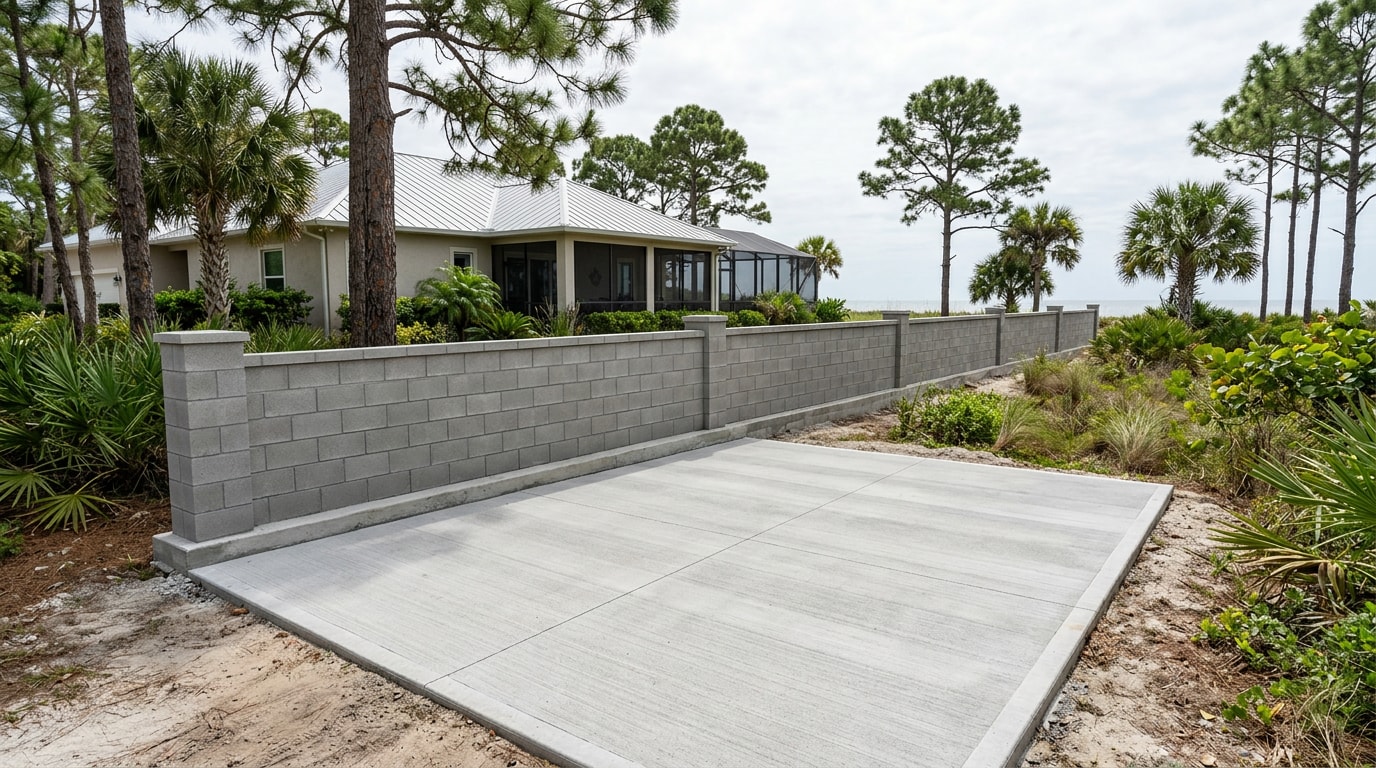
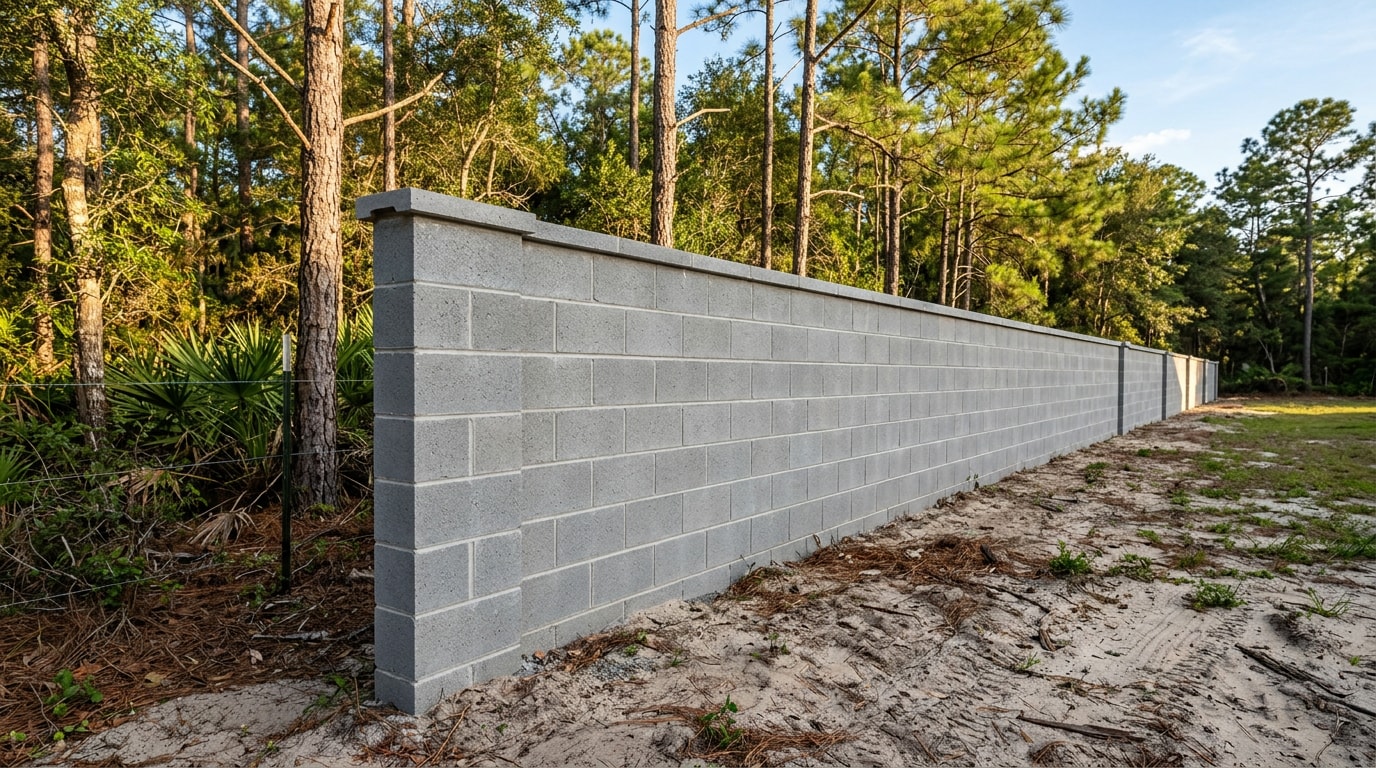
Mason block in Milton, FL shows up on more properties than almost any other wall material: stem walls off Stewart Street, privacy walls along Highway 90, block mailboxes in half the subdivisions out toward Pace. It holds up because it does not rot, does not feed termites, and can be reinforced to carry hurricane wind loads. Here is what a block job actually costs here, what the city and county require before you start, and how to tell a solid block mason from a risky one.
What Mason Block Costs in Milton, FL
Price moves with wall height, reinforcement, finish, and site access, so treat these as planning ranges and not a quote.
The figures below reflect what our crews typically estimate for residential block work in Santa Rosa County. They are priced per square foot of finished wall face unless noted.
| Project type | Typical installed range | What drives the number |
|---|---|---|
| Low garden or planter wall (under 3 ft, light reinforcement) | $18 to $28 per sq ft | Footing size, curves, cap detail |
| Privacy or perimeter wall (5 to 6 ft, reinforced) | $26 to $45 per sq ft | Rebar spacing, grout fill, stucco finish |
| Block stem wall / foundation | $22 to $38 per sq ft | Footing depth, fill, inspections |
| Engineered retaining wall (over 4 ft) | $45 to $90 per sq ft | Drainage, backfill, engineer stamp |
| Block mailbox or column | $700 to $2,200 each | Size, veneer, cap, footing |
What pushes a job to the high end:
- Tall walls that need engineered footings or solid grout fill
- Retaining walls with drainage stone, filter fabric, and weep detail
- Stucco, split face, or brick veneer finishes
- Tight access that forces hand hauling instead of a boom truck drop
- Demolition and haul off of an existing wall
What keeps it down: straight runs, standard 8 inch units, a level site, and scheduling outside the spring rush.
A number worth doing yourself before you call anyone
A nominal 8x8x16 unit covers 0.89 square feet of wall face including the mortar joint. That works out to about 112.5 blocks per 100 square feet of wall.
So a 6 foot tall, 60 foot long privacy wall is 360 square feet, or roughly 405 blocks plus corners, caps, and bond beam units.
Run that math before bids come in. If a contractor's material line is wildly off from it, ask why. Get at least three written bids that break out material, labor, footing, reinforcement, and finish separately, because a single lump sum number makes comparison impossible.
Ready for a real figure instead of a range? Get a free estimate and we will price your wall off the actual site conditions.
What Is Mason Block?
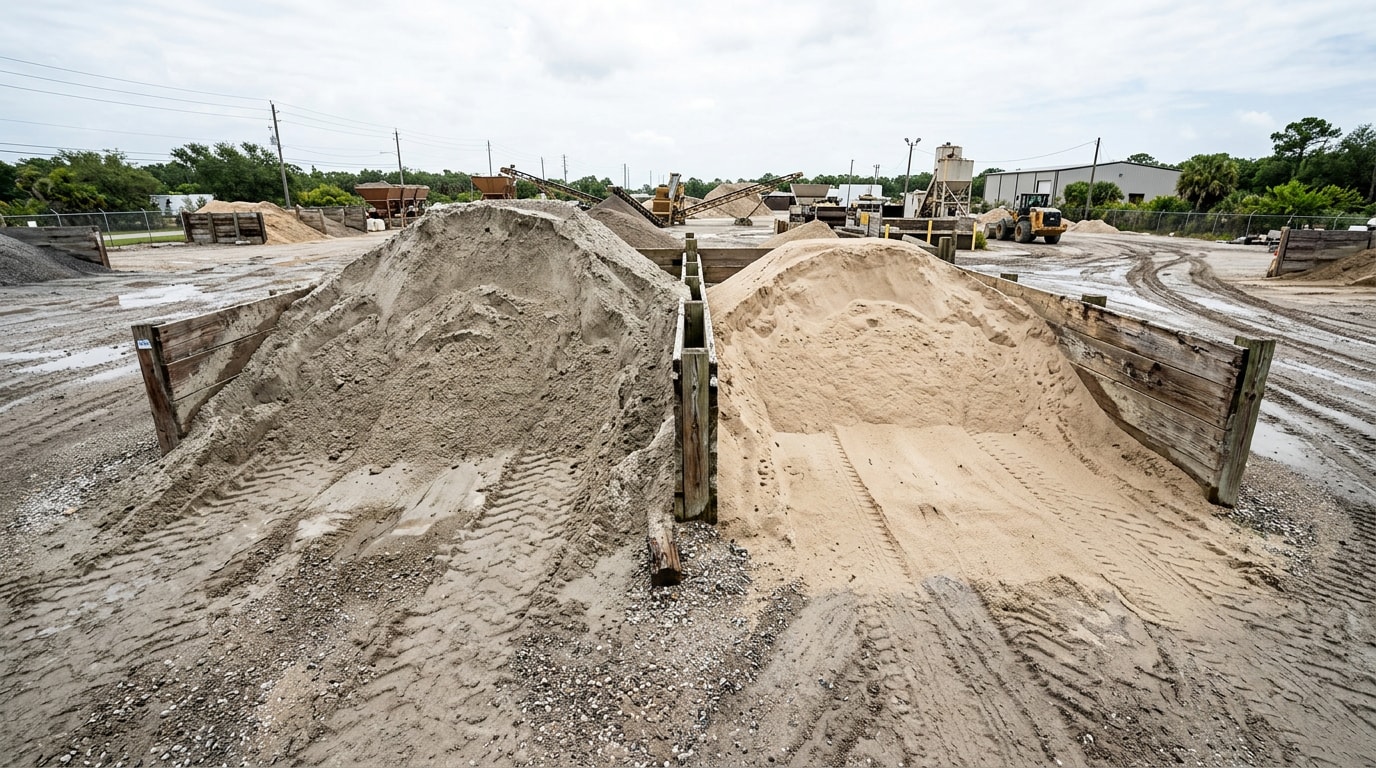
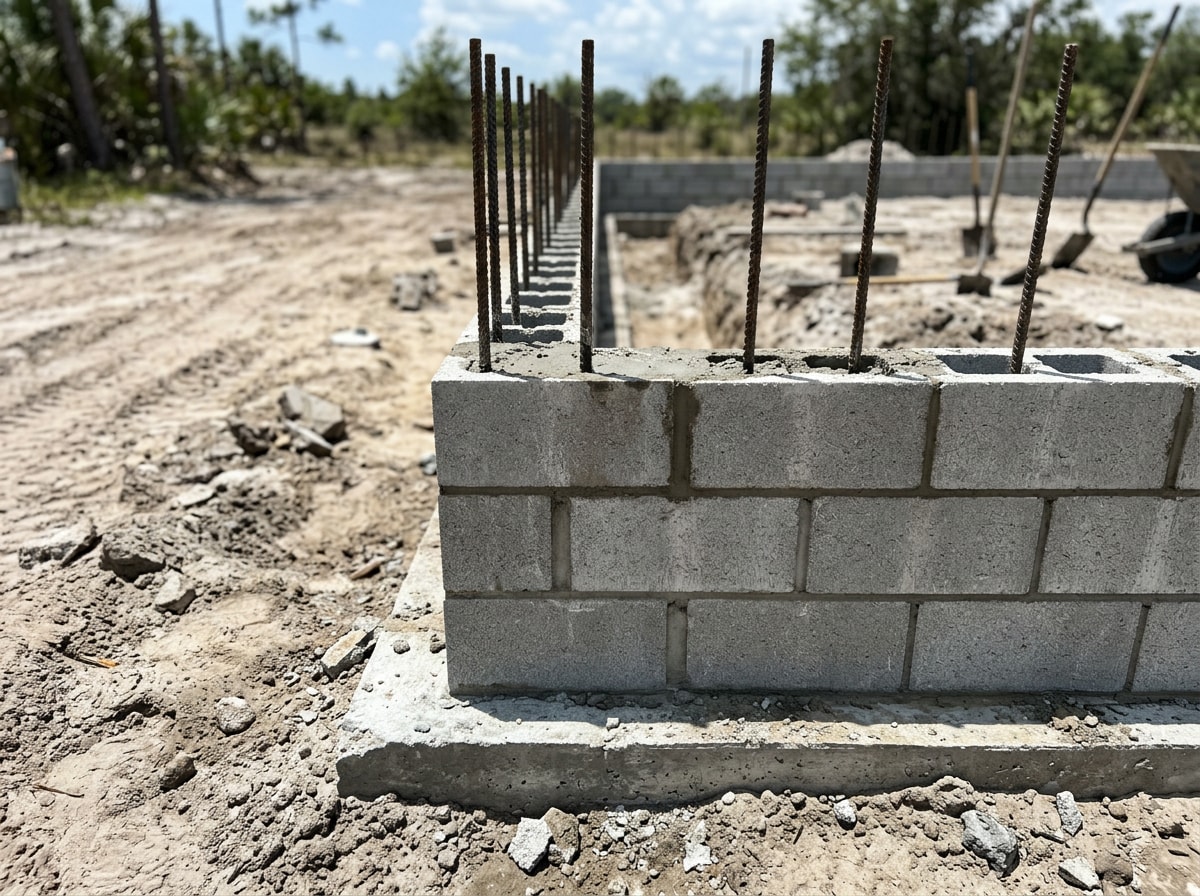
Mason block is a hollow or solid concrete masonry unit (CMU) laid in mortar courses to build walls, foundations, and structures. Units are made from cement, sand, and aggregate, then cured to a set compressive strength. Hollow cores get filled with grout and steel rebar where load capacity and wind resistance matter.
You will hear the same product called cinder block, concrete block, CMU, or just block. True cinder block used coal ash as aggregate and is rarely produced now. What gets delivered to a Milton job site is modern concrete block made to consistent dimensional and strength standards. If you want the deeper material tradeoffs, our breakdown of CMU advantages and disadvantages covers strength, moisture behavior, and finish options.
Common Block Sizes and Types
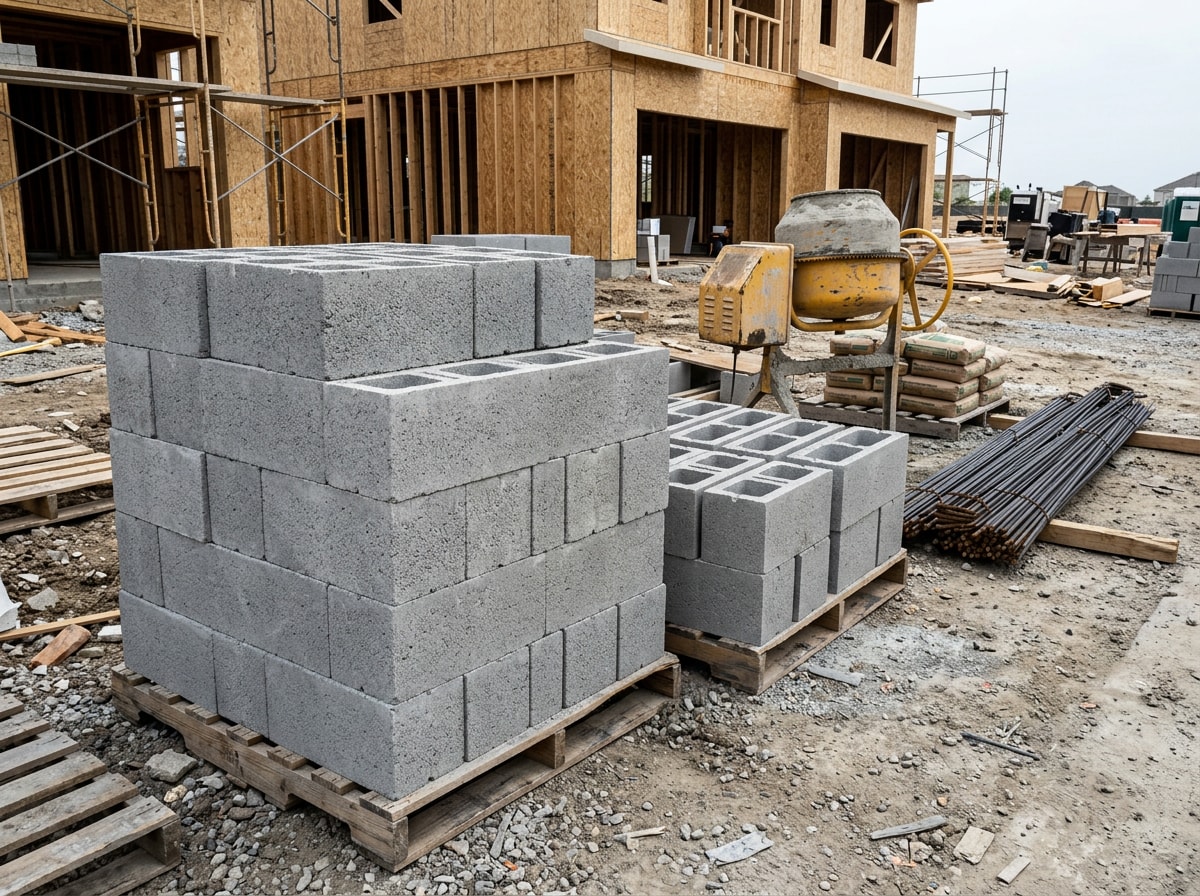
Nominal sizing includes the mortar joint, so an 8 inch block actually measures about 7 5/8 inches. The units you will see most often around Northwest Florida:
- 8x8x16 standard stretcher: the workhorse for walls, stem walls, and piers
- 4x8x16 and 6x8x16: non structural partitions, veneer backup, low garden walls
- 12x8x16: heavier loads, tall walls, some foundation work
- Corner and bond beam units: shaped to accept horizontal rebar at the top of a wall
- Split face and scored block: textured faces where the wall stays exposed
Lintel blocks, half blocks, and open end A units round out most orders. A good mason lays the wall out in 16 inch increments to cut waste and keep joints clean.
Mason Block vs. Brick vs. Poured Concrete
Brick is smaller, more labor intensive per square foot, and usually chosen for looks. Poured concrete walls need formwork and often a pump truck, which is efficient on large pours and awkward on a tight residential lot.
Block sits in the middle. It goes up faster than brick, needs no forms, and can be reinforced to hit structural targets. It also accepts stucco, paint, or veneer later if you change your mind about the finish. See examples of both approaches on our brick and block masonry page.
Permits, Code, and Inspections for Block Work in Milton
This is where local detail actually matters, because the rules change depending on which side of the city line you are on.
Properties inside Milton city limits are not regulated by the county land development code. Santa Rosa County states that properties inside the city limits of Milton, Gulf Breeze, and Jay fall outside the county land development code and directs owners to the appropriate city planning department for fence and wall rules.
Two specifics worth knowing before you order material:
- Inside city limits: Milton's general regulations prohibit a fence, wall, or other obstruction at a corner within 15 feet of the intersection of the right of way lines, limit walls along the side lot line beyond the front building line in residential districts to four feet, and require a city development permit to erect a fence or wall.
- Unincorporated county:
county fence requirements bar walls and fences within 20 feet of an intersection, prohibit barbed wire in residential subdivisions, and add extra restrictions on Navarre Beach and in the Bagdad Historic Zoning District. Review the current Santa Rosa County fence and wall requirements before you finalize a layout.
Beyond those, expect a permit and often an engineered drawing for anything structural or load bearing and for retaining walls over roughly four feet. Short decorative garden walls frequently do not require one. Thresholds change, so confirm with the building department rather than copying what a neighbor did five years ago.
Inspections focus on reinforcement. Inspectors look at footing size and depth, vertical rebar spacing and lap length, grout fill in reinforced cells, and the bond beam at the top of the wall. Structural masonry in Florida is governed by the masonry chapter of the Florida Building Code, which references national standards for materials and testing.
Flood zones add another layer. Parts of Milton near the Blackwater River and Pond Creek carry elevation requirements that affect foundation design, so pull your parcel on the FEMA Flood Map Service Center early in planning. Foundation work in those zones belongs with a crew that does concrete foundation and footer installation regularly.
Why Block Holds Up in the Milton Climate
Wood framing and Northwest Florida humidity have a complicated relationship. Block sidesteps most of it.
Santa Rosa County sits in a high wind zone, and construction here meets Florida Building Code wind load provisions stricter than most of the country. Grouted, reinforced block carries lateral load well, which is a large part of why the material stayed popular after Ivan and Sally.
Block also does not rot, does not warp when the dew point sits in the low 70s for weeks, and gives termites nothing to eat. That matters in a region where correct pest identification drives control method and subterranean pressure is constant. The UF/IFAS extension publication on subterranean termites is the best plain language reference on how they reach structures.
One honest caveat from the field: block is porous. We have opened up more than one six year old painted wall in Milton and found saturated cores because nobody capped the top course. Untreated block wicks moisture. Flashing, a capillary break at the footing, an intact cap, and a breathable coating do the real work. The block alone is not a waterproofing system.
Common Block Projects Around Santa Rosa County
Not every job needs an engineer and a permit. The range local masons handle most:
- Stem walls and foundations for new construction and additions
- Retaining walls on the sloped lots near the Blackwater River
- Privacy and perimeter walls along busier corridors
- Block mailboxes and columns built to HOA specs
- Outdoor kitchens and fire pit surrounds framed in block, then veneered
- Garage and shed walls where low maintenance wins
- Repairs: cracked mortar joints, settlement cracks, spalled units, failed caps
You can see finished examples across our project gallery, and the full scope of what our masonry contractor crews handle is listed on the category page.
How to Hire a Block Mason in Milton, FL
Florida licenses masonry contractors, and verification takes about two minutes. Ask for the license number and confirm it is active before any deposit changes hands. A licensed contractor in Santa Rosa County is required to carry workers compensation and general liability insurance.
Six questions worth asking before you sign:
- Are you licensed and insured in Santa Rosa County? Have the certificate of insurance sent directly from the carrier.
- Who pulls the permit?
The county flags a contractor asking you to obtain the permit as a warning sign, because the permit holder is responsible for making changes needed to pass inspection.
- What is the footing spec? A vague answer here predicts problems later.
- How is the wall reinforced? You want rebar size, spacing, and which cells get grouted.
- Can I see block work you finished three or more years ago? Fresh walls all look good. Older ones reveal joint quality.
- What is the payment schedule? Large upfront deposits are unusual in residential masonry.
Local knowledge counts too. A mason who works Milton regularly already knows the sandy soil pockets, which inspector asks for what, and which supplier actually stocks the units your job needs. Our homepage lists the full Gulf Coast service area.
Maintaining a Block Wall in Northwest Florida
Block is low maintenance, not no maintenance. An annual walk around catches most problems while they are still cheap.
- Look for hairline cracks stepping diagonally through mortar joints. Those usually signal settlement and deserve a professional look.
- Check that caps are intact. Open cores collect water and eventually spall the top course.
- Watch for efflorescence, the white powdery bloom that means moisture is moving through the wall.
- Keep grade and downspouts directing water away from the base.
Repoint failed joints every couple of decades and recoat painted or stuccoed walls roughly every 7 to 10 years. Do that and a block wall stays serviceable for generations.
FAQ
How much does a block wall cost per square foot in Milton, FL?
Most residential block walls here land between $18 and $45 per square foot of wall face installed. Low garden walls sit near the bottom of that band. Tall reinforced privacy walls with stucco sit near the top, and engineered retaining walls over four feet run higher.
How many blocks do I need per 100 square feet of wall?
About 112.5 standard 8x8x16 units, since each covers roughly 0.89 square feet with the mortar joint included. Add 5 to 10 percent for corners, bond beam units, half blocks, and breakage.
Do I need a permit for a block wall in Milton, FL?
Inside city limits, erecting a fence or wall requires a city development permit, and side lot line walls beyond the front building line in residential districts are capped at four feet. In unincorporated Santa Rosa County the rules differ, including a 20 foot corner clearance at intersections. Structural or load bearing block and retaining walls over about four feet generally need a permit and an engineered drawing either way.
Does a mason block wall need a concrete footing?
Yes for anything structural or over a couple of feet tall. The footing is where most failed walls actually failed, so its width, depth, and rebar matter more than the block itself. Freestanding walls in sandy soil need a footing sized for the wall height, not a guess.
How long does a mason block wall last in Florida?
A properly built, reinforced wall commonly lasts 50 to 100 years or more. Lifespan depends far more on footing, drainage, and reinforcement than on the units. Walls that fail early almost always failed at the foundation or from water intrusion.
Is mason block cheaper than a wood framed wall?
Block costs more upfront. Over a long ownership period the gap narrows, because block resists termites, rot, and wind damage and often carries lower maintenance and insurance costs in coastal counties.
Can a block wall be finished so it does not look like plain gray block?
Yes. Stucco is the most common finish in Northwest Florida, followed by elastomeric paint, brick or stone veneer, and split face units that come textured from the plant. Decide before the wall goes up, since finish affects both cost and how the wall handles moisture.
What is the difference between cinder block and concrete block?
Cinder block used coal ash as aggregate and is lighter and weaker. Nearly all modern units are concrete block made with sand and stone aggregate. The terms get swapped in conversation, but what a supplier delivers today is a concrete masonry unit.
---
Written and reviewed by the masonry crew leads at Gulf Breeze Concrete Services, who build block walls, stem walls, and retaining walls across Milton, Pace, and Santa Rosa County. Questions about your wall, footing, or permit path? Contact us for a free estimate.