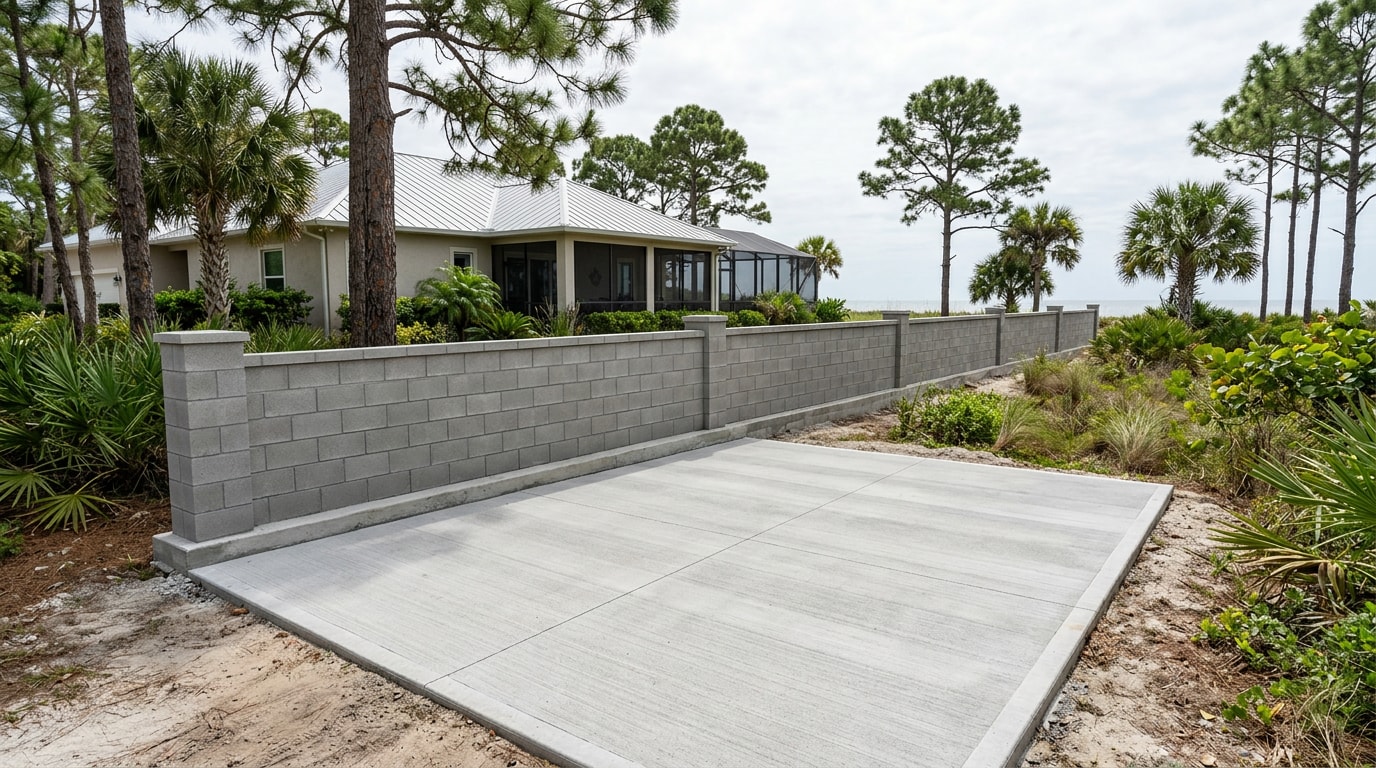
Homeowners who parge concrete in Gulf Breeze, FL usually want two things at once: a foundation that looks finished and a block wall that shrugs off salt air and wind driven rain. A parge coat delivers both, but only when the prep and the cure are handled correctly. Here is what it costs in 2026, which mix belongs on your wall, and how to spot a coat that is already failing.
What Is Parging, Exactly?
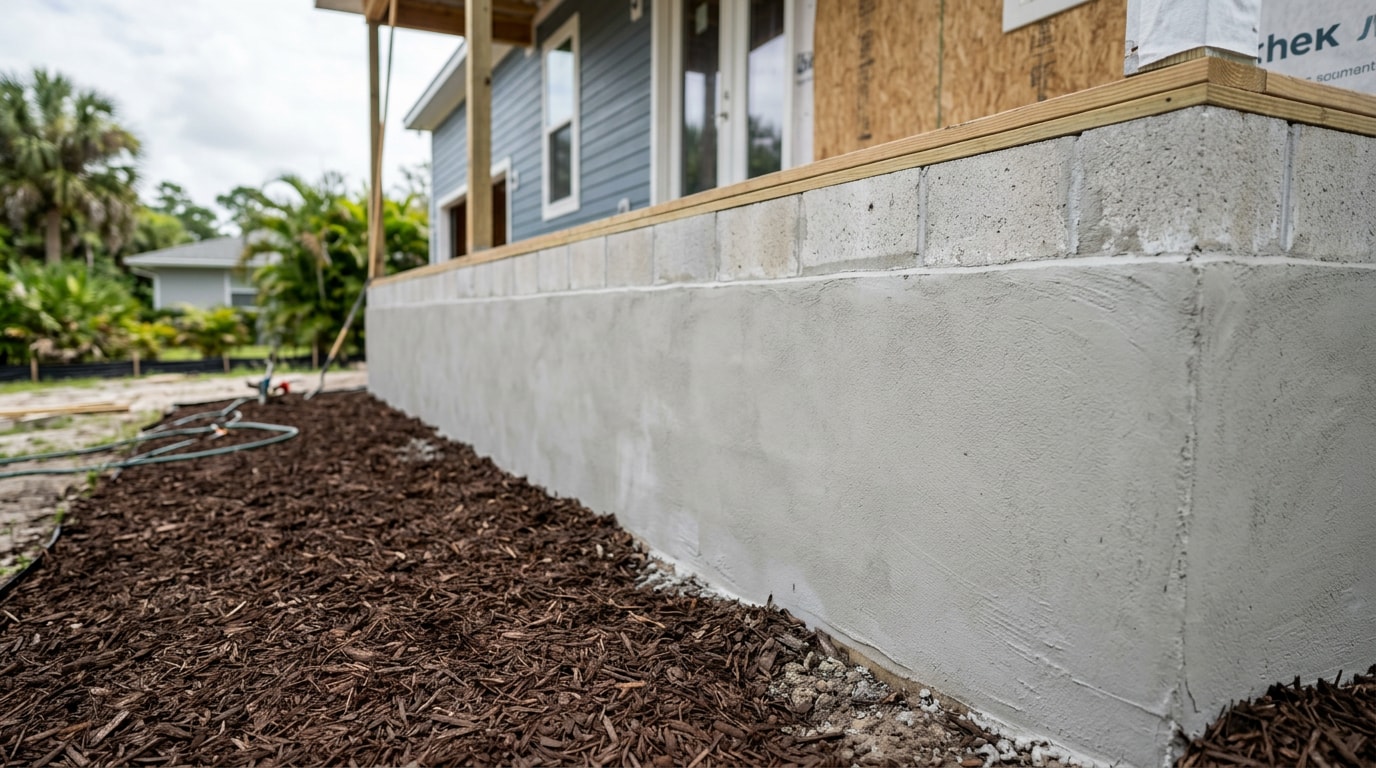
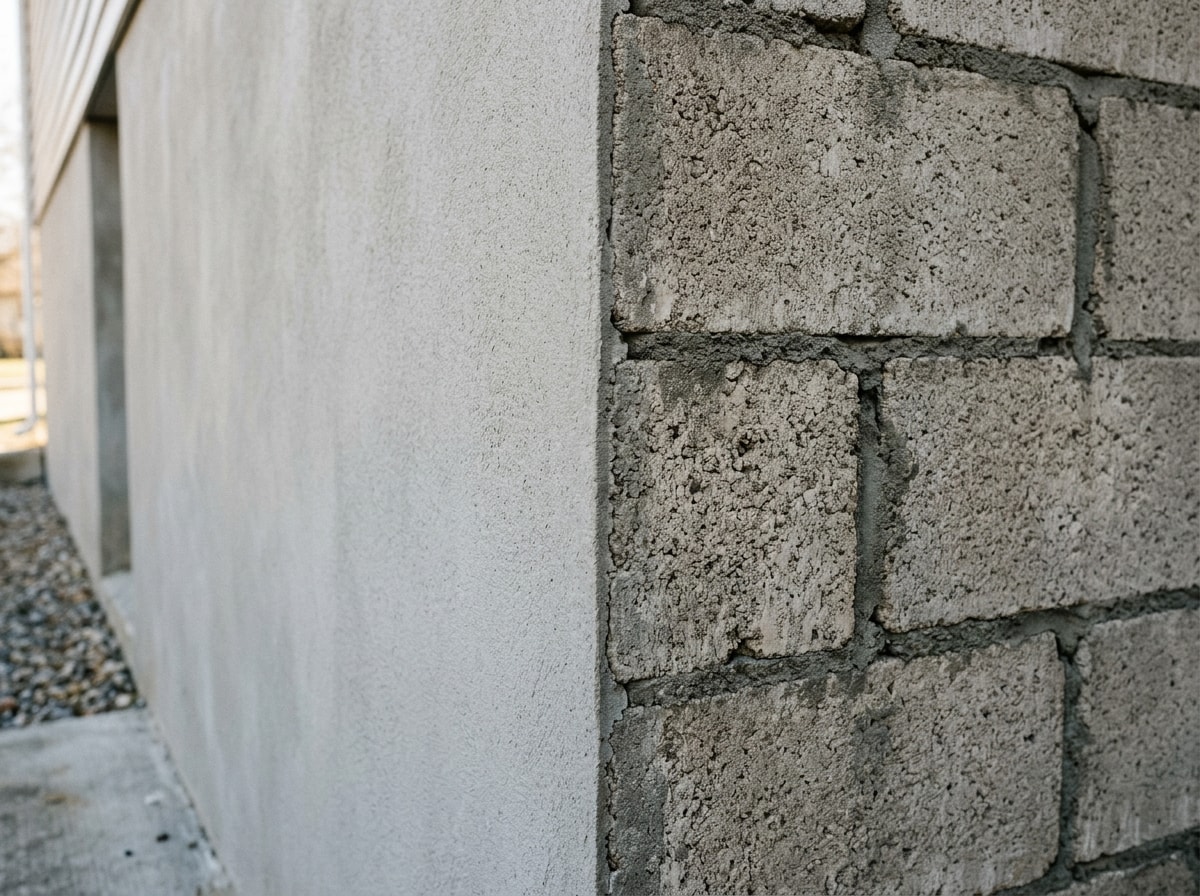
Parging is a thin coat of cement based mortar troweled over concrete block, CMU, or poured foundation walls to smooth the surface and shield it from weather.
It is a finish and protection layer, usually about a quarter inch thick per coat. It is not a structural repair, and it is not a waterproofing system on its own.
Most parge coats cover the exposed portion of a foundation and carry a few inches below grade so there is no visible stopping point at the soil line.
That exposed band is wide around here. Stem wall and CMU construction is common across Santa Rosa County, so block is often the first thing you see at the base of a house. If you are still sorting out the difference between the two material families, our guide on whether masonry and concrete are the same thing covers it.
One caution worth stating early: a parge coat will not seal out groundwater, and it will not fix a wall that is cracking from settlement or structural movement.
What It Costs to Parge Concrete in Gulf Breeze, FL
Parging is priced by the square foot of wall surface, not by linear foot of house. Treat the figures below as planning estimates rather than quotes.
| Parging type | Installed cost per sq ft | Typical service life | Best suited to |
|---|---|---|---|
| Standard cementitious | $3 to $7 | 8 to 15 years | Sound, shaded, never coated block |
| Polymer modified or acrylic | $6 to $12 | 15 to 25 years | Hairline cracking history, salt spray, previously coated walls |
| Lime based (breathable) | $8 to $14 | Varies widely | Older or historic masonry that needs vapor movement |
Worked example. A home with a 90 foot exposed perimeter and a 2 foot stem wall has roughly 180 square feet of surface.
- Standard cementitious mix: about $540 to $1,260
- Polymer modified mix: about $1,080 to $2,160
Published ranges online vary wildly, and the reason is simple. The bargain numbers assume a clean, sound, never painted wall and a single coat with no demolition, no mesh, no bonding primer, and no disposal. Add any one of those and you land in the upper half of the range fast.
Two conditions reliably push Gulf Breeze quotes upward:
- Stripping a failed parge coat off painted block, which is slow hand work
- Extra prep and rinsing on salt exposed walls close to the Sound
Ask for an itemized written quote that names prep, bonding primer, mesh, coats, and disposal as separate lines. If the quote is one number with one sentence, you have no way to compare it to anyone else's.
Want figures for your own wall? Get a free estimate and send photos of the foundation, including a close up of the mortar joints.
Why Parging Matters on the Gulf Coast
The benefits stack, and they are practical rather than cosmetic alone.
- Appearance. A parge coat hides rough mortar joints, chipped block faces, and mismatched patch repairs, which lifts curb appeal immediately.
- Surface moisture protection. Coating the block face reduces how much wind driven rain soaks into the masonry and slows intrusion at the joints, where most water gets in.
- A surface that holds a finish. Paint, stucco, and elastomeric coatings all bond better to a smooth parge coat than to raw block.
Northern contractors frame every parging article around freeze thaw damage. That is not our problem here. Ours is salt air, near constant humidity, and horizontal rain during summer storms and tropical systems.
The Concrete Masonry and Hardscapes Association notes in its technical guidance on water repellents and surface coatings for concrete masonry walls that cementitious surface coatings can meaningfully increase a wall's resistance to water penetration while also changing its texture. It also flags the catch: differential movement in the wall transmits stress straight into the coating, which is exactly why flexible mixes matter on walls that have moved before.
Treat foundation protection here as layered defense. Grading, gutters, tooled joints, and a parge coat all do part of the work. None of them does all of it.
Parging Materials and Mixes
Parging describes a technique, not a single product. The mix drives the price, how much movement the coating tolerates, and how long it lasts before renewal.
Cement Based Parging
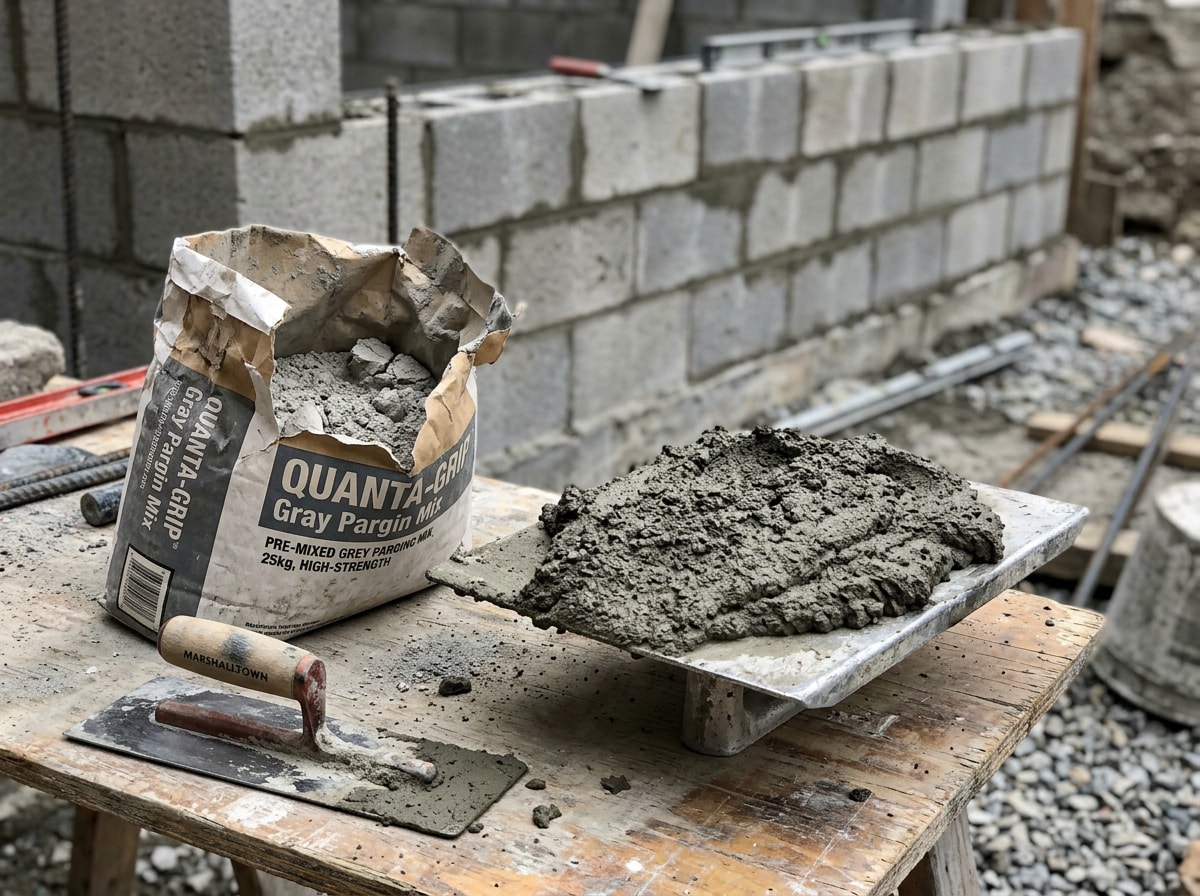
Standard cement parging is a straightforward blend of Portland or masonry cement, fine sand, and water.
Applied thickness typically runs 1/4 inch to 3/8 inch per coat. Confirm the specifics against the manufacturer's technical data sheet for the product you are using, since coverage rates, maximum build, and water ratios vary by bag.
Over painted, sealed, or previously coated block, a bonding agent is not optional. Fresh mortar will not grab a slick surface reliably on its own.
This is the most economical and most common choice. It is also a sacrificial layer by design. It takes the abuse so the block does not, and it will need patching or renewal eventually.
Acrylic and Polymer Modified Parging
Polymer modified and acrylic blends add resins that leave the cured coat more flexible and stickier to the substrate.
The payoff is crack resistance and adhesion. The tradeoff is material cost, often roughly double.
A simple decision rule:
- The wall has hairline cracking history, has been coated before, or catches full sun and salt spray, choose the flexible mix.
- The wall is sound, shaded, and never coated, standard cementitious mix is usually enough.
Lime Based and Specialty Mixes
Lime based mixes stay breathable and are the right call on older or soft historic masonry that needs vapor to move outward. Epoxy polymer specialty products exist for industrial repair work.
Both are niche for typical Gulf Breeze residential foundations, but worth naming so you recognize them on a quote.
Signs Your Parge Coat Is Failing
Failing parging announces itself. Walk the foundation and look for:
- Hairline cracks that widen noticeably over a single season
- Sections that sound hollow or drummy when you tap them with a knuckle
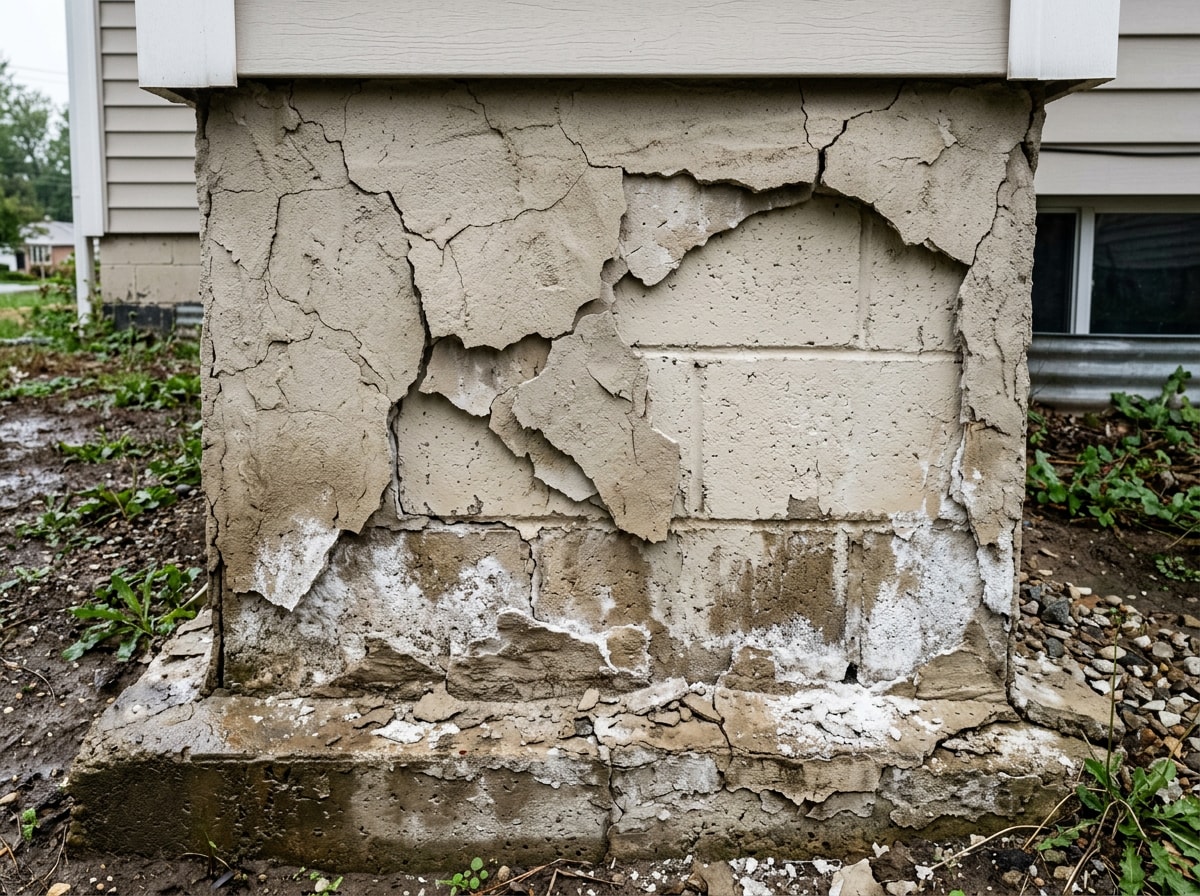
- Flaking and spalling concentrated at the base of the wall
- Sheets of parging peeling away, which almost always means bond failure over paint or an older coat
White powdery efflorescence or rust colored staining is a different signal entirely. It tells you water is moving through the wall and depositing salts as it evaporates, and that is worth diagnosing before you patch anything.
Green or black algae on a shaded, north facing stem wall is routine in our humidity. That is a cleaning task, not automatic evidence of failure. If cleaning reveals soft or hollow areas underneath, the wall needs repair, not a rinse.
Maintenance is light. Inspect twice a year, repair small cracks while they are still small, and keep the surface clean.
Go easy with the pressure washer. High pressure can drive water behind the coat or knock loose sections free, which turns a cleaning job into a repair job.
How to Parge a Block Wall, Step by Step
Knowing the sequence lets you judge a contractor's process or handle a small patch yourself. Jobs fail at prep and cure, almost never at the troweling.
Step 1: Prepare the Surface
- Knock off loose parging, old mortar clumps, and anything flaking.
- Repair damaged block and repoint missing mortar joints before you coat anything.
- Clean the wall thoroughly, then dampen it. A dry, thirsty block wall pulls water out of fresh mortar and ruins the bond.
- Apply a bonding agent over painted or previously coated surfaces.
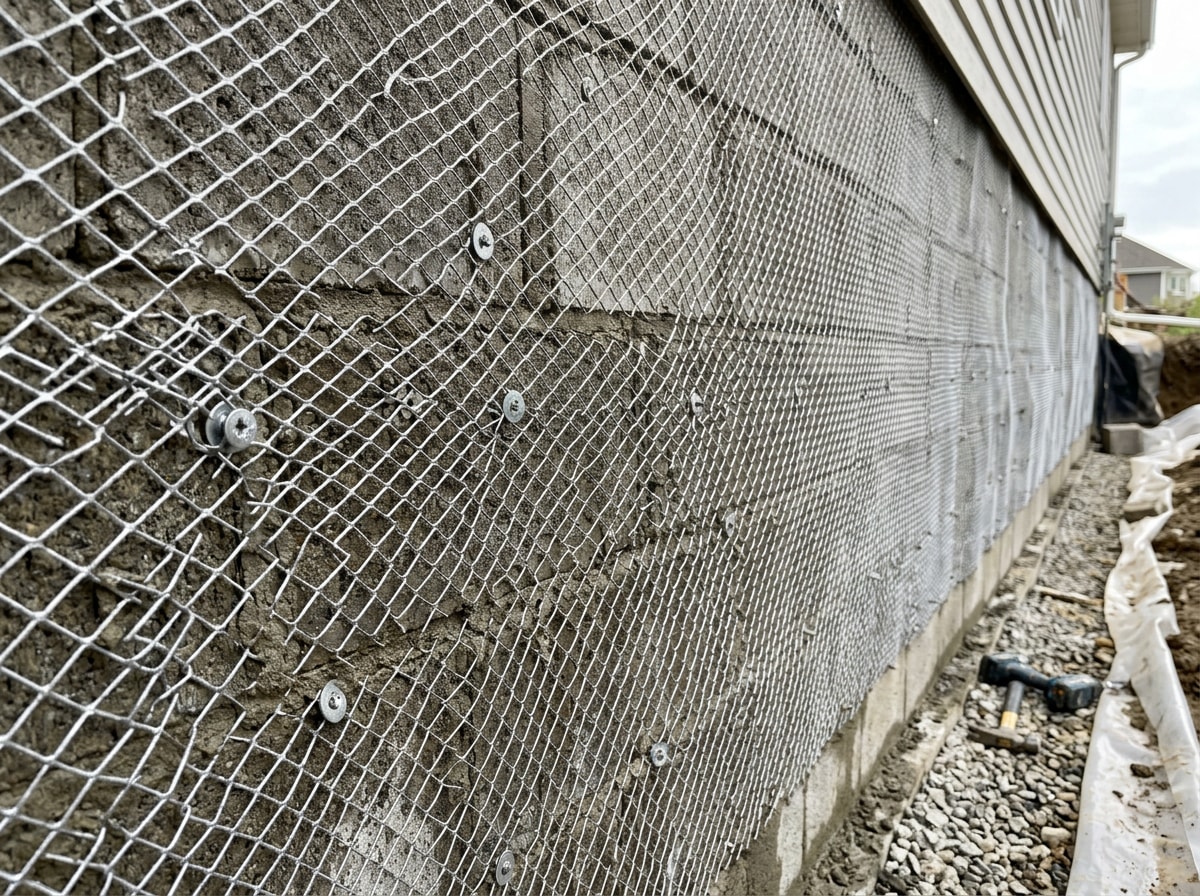
- Fasten galvanized or diamond wire mesh lath on badly deteriorated walls or non masonry substrates so the coat has something to grip.
Here is a distinction that trips up DIYers, and most parging articles skip it entirely. Industry hot weather guidance says do not pre wet concrete masonry units before laying them, because CMU expands when wet and shrinks as it dries, which increases shrinkage cracking in the finished wall.
Parging is the opposite case. Product data sheets for parging mixes call for saturating the existing wall and then removing standing water, leaving the surface damp but not wet. Same material, opposite instruction, and knowing which situation you are in is the difference between a bonded coat and a drummy one.
The non negotiable caveat: a structurally compromised wall has to be repaired first. Parging over active cracking hides the problem only until it telegraphs through the new coat, usually within a year.
Step 2: Mix and Apply the Parge Coat
Mix to a thick paste. It should hold its shape on the hawk rather than run off the trowel. Too wet and it sags, too dry and it will not bond.
Load the trowel and apply with upward sweeping strokes, holding thickness even at roughly 1/4 inch to 3/8 inch.
Overlap each section by a few inches so you do not leave cold joints, then level the surface with long, smooth passes.
Most quality work uses two coats. The scratch coat goes on first and gets lightly raked, cures for roughly 24 hours, then a thinner finish coat follows.
Texture is decided at that final stage. Smooth, lightly sanded, and heavier textured finishes are all options. Sanded and textured finishes hide minor imperfections far better than glass smooth ones, which is why we steer most homeowners toward a light sand float.
Step 3: Cure the Parging
Mist the wall lightly with water several times a day for the first few days. Slow drying lets the cement hydrate properly, and proper hydration is what prevents shrinkage cracking and early flaking.
Heat accelerates everything. On a sunny Gulf Breeze afternoon a parge coat can skin over long before it has cured.
The Brick Industry Association's technical note on hot and cold weather masonry construction explains the mechanism: rapid evaporation pulls water out of the mortar, leaving too little for hydration, which reduces bond strength.
Practical translation for our climate:
- Work shaded elevations during peak afternoon heat
- Tackle smaller sections at a time
- Mist more often than any northern how to guide tells you
- Schedule the south and west faces for morning
Permits and Code in Santa Rosa County
A cosmetic parge coat on an existing foundation is typically maintenance work. Structural repair of a foundation wall is not.
If the scope includes repairing cracked block, replacing units, or anything a plan reviewer would call structural, confirm requirements with Santa Rosa County Development Services permitting guidelines before work starts. The county also lets you verify that a contractor is licensed and carries workers compensation and general liability insurance, which is worth five minutes of your time on any foundation job.
Verifying a license is free. Fixing an unpermitted structural repair at resale is not.
DIY vs. Hiring a Professional Mason
A small patch on an otherwise sound wall is genuinely doable. Materials are cheap, the tools are basic, and a four square foot repair forgives a learning curve.
A full foundation is a different job. So is any wall with active moisture issues, efflorescence, or a previous coating that let go. Those need diagnosis before they need mortar.
Most of the failed parge coats our crews get called to strip in Gulf Breeze have one thing in common: they were troweled straight over painted block with no bonding agent and no mesh. The mortar looked fine on day one and let go in sheets within a couple of wet seasons.
What an experienced mason buys you is consistency across an entire elevation, accurate judgment about whether the substrate will hold a bond, and correct mix and cure decisions in Florida heat. Just as valuable, a pro will tell you when a wall should not be parged yet.
Our crews handle brick and block masonry, concrete foundation and footer installation, and broader masonry contractor services across the area, and you can see finished work in our project gallery.
FAQ
What is a parge coat?
A parge coat is a thin layer of cement based mortar applied over concrete, block, or masonry. It smooths rough block and mortar joints into an even finish and adds a measure of surface moisture and weather protection to the wall underneath.
Is parging necessary?
Not structurally. A block wall stands fine without it.
On exposed block foundations it is strongly recommended for protection and appearance, and some waterproofing and stucco assemblies specifically require a parge coat as the substrate before the protective layer goes on.
How much does parging cost per square foot?
Roughly $3 to $7 per square foot installed for standard cementitious parging, and $6 to $12 for polymer modified products. Prep, mesh, and removal of failed coatings move the number upward.
How long does a parge coat last?
A standard cementitious coat typically runs 8 to 15 years before it needs patching or renewal. Polymer modified coats often reach 15 to 25 years. Sun exposure, salt spray, and the quality of the original prep matter more than the brand on the bag.
Can you parge over painted concrete block?
Yes, but only with real preparation. Remove all loose and peeling paint, then apply a bonding agent, and add mesh lath if the paint is extensive or the substrate is questionable. Skipping this is the single most common cause of parge coats peeling away in sheets.
Does parging waterproof a foundation?
No. Parging reduces surface absorption and slows wind driven rain at the joints, but it is not a waterproofing membrane and will not stop hydrostatic pressure or groundwater. If you have water entering a wall, solve the drainage and grading first.
How thick should a parge coat be?
Generally 1/4 inch to 3/8 inch per coat, applied in two coats for best results. Check the product data sheet, since maximum build per lift varies by mix.
Can you parge below grade?
The coat is normally carried a few inches below the soil line so there is no visible stopping point. Some parging products are rated for full below grade use, but below grade waterproofing is a separate assembly with its own membrane and drainage requirements.
What is the difference between parging, plastering, and stucco?
Purpose and thickness separate them. Parging is a thin protective coat applied directly to masonry or concrete. Stucco is a thicker, multi layer exterior cladding system. Plaster is an interior finish. Similar looking results, different build ups, different jobs.
Do I need a permit to parge a foundation in Gulf Breeze?
A purely cosmetic parge coat is usually treated as maintenance. Structural repairs to a foundation wall are a different matter, so confirm scope with Santa Rosa County Development Services before work begins.
Talk to a Local Masonry Crew
Gulf Breeze Concrete Services is a licensed and insured concrete, masonry, and excavation contractor serving Gulf Breeze, Pensacola, Navarre, and the surrounding Santa Rosa County communities. Our crews work on stem walls, block foundations, and coastal masonry year round, which is why our recommendations on mixes and cure timing are keyed to salt air and summer heat rather than freeze thaw cycles.
Send photos of your foundation and we will tell you honestly whether it needs a parge coat, a repair, or nothing at all. Start at our homepage or request a free estimate directly.